
4 hr 30 min
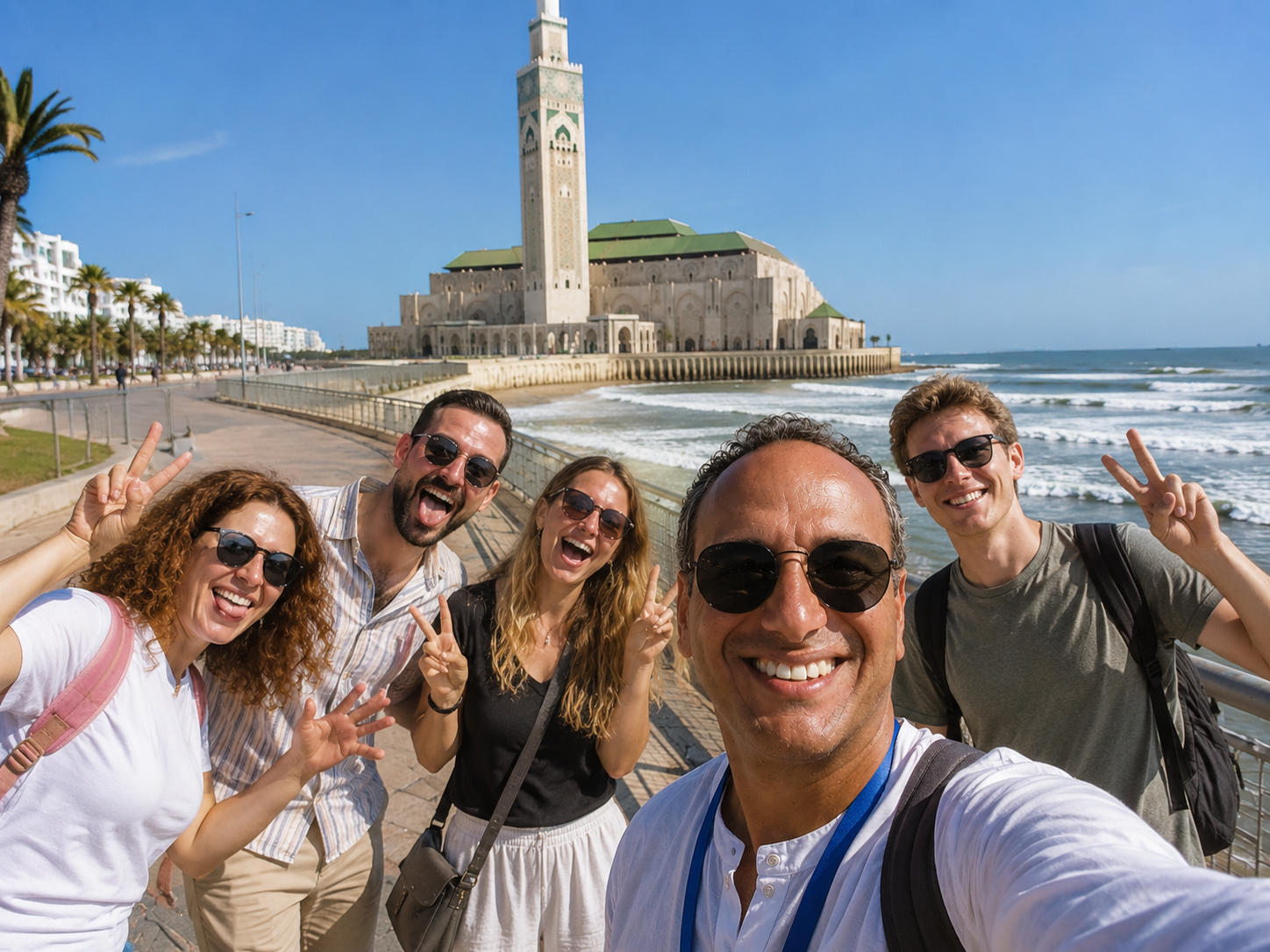
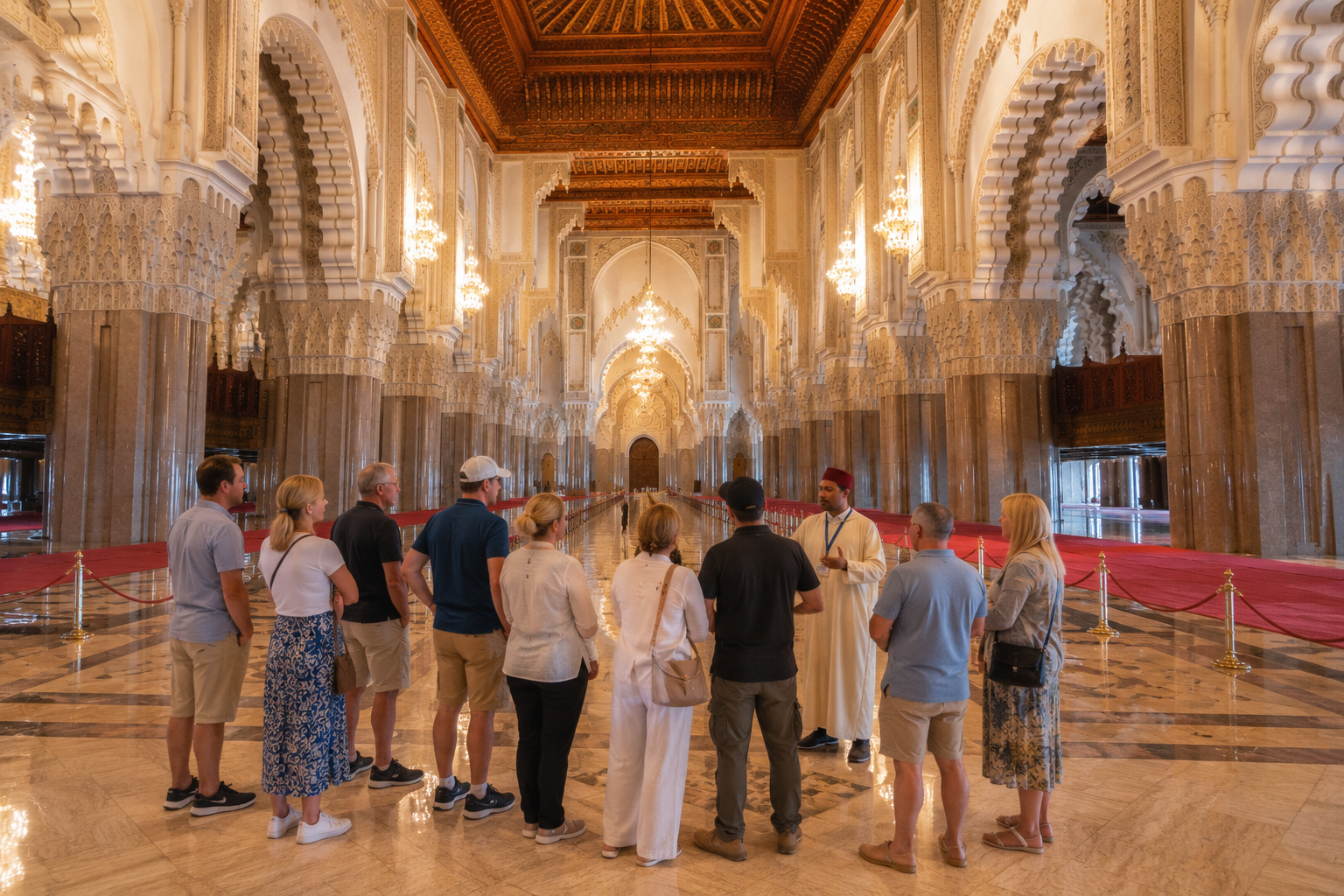
Casablanca Highlights & Hassan II Mosque Guided Tour
- Expert local guide
- Small group
- Skip-the-line access
- Free cancellation
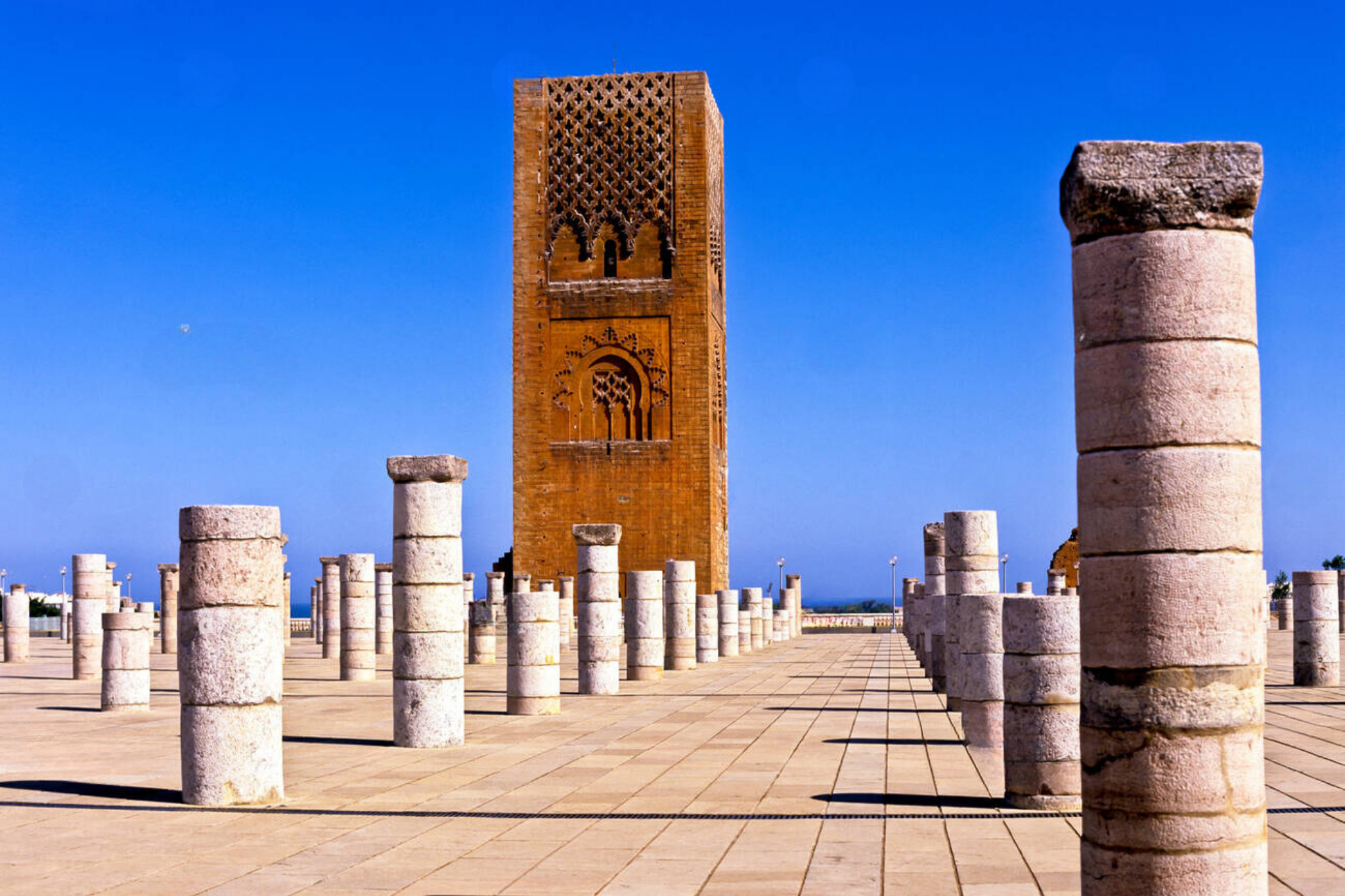
Day Trips From Casablanca — Roman Ruins, Imperial Cities & Coastal Roads
Mosaics wake at first light, cedar hills hold the afternoon.
Compare fares, pick the fit — all bookings are mobile-voucher and eligible for free cancellation where shown.
4 hr 30 min
6 hr
5 hr
Worth it paired with Meknes, not alone
Of all the day trips from casablanca, Volubilis asks the most from your calendar and the least from your wallet. The 70 MAD adult entry is trivial next to roughly four hours of driving each way, so the real cost is time, fuel and a driver's fee. What you get is Morocco's best-preserved Roman city: the Decumanus Maximus running toward the Tangier Gate, the Capitol and basilica still standing, and in-situ mosaics — Orpheus, the Labours of Hercules — under open sky rather than museum glass. That payoff lands hardest for anyone who cares about Mauretania Tingitana, UNESCO archaeology, or ruins they can walk through unroped. Book excursions from casablanca that fold in Meknes or the hillside shrine town of Moulay Idriss Zerhoun, and the mileage justifies itself. Standalone day trips from casablanca tours here leave you paying a full day's transit for ninety minutes on site.
Bottom line: Buy your day trips from casablanca tickets only if Volubilis is one stop on a Meknes-Moulay Idriss loop — as a solo errand, the drive eats the reward, and any single-site day trip from casablanca tour will feel thin by dusk.
For most travelers weighing day trips from Casablanca, Volubilis wins on daylight logistics while Chefchaouen wins on scenery — pick Volubilis if you want Roman ruins in a single day, and Chefchaouen if you can spare a night away. A skip-the-line Volubilis ticket and an early departure make the round trip realistic without an overnight stay.
|
Top pick Volubilis |
Chefchaouen | |
|---|---|---|
| What you see | Roman ruins, mosaics, triumphal arch | Blue-washed medina, Rif Mountain views |
| Distance and drive time from Casablanca | ~260 km, about 3 hours | ~340 km, about 5–6 hours |
| Typical visit length | 2–3 hours on site | Full day to 2 nights |
| Best for | History buffs, flat easy walking | Photography, slow café culture |
| Combine with | Meknes, Moulay Idriss Zerhoun | Akchour waterfalls, Tangier |
| Season to avoid | Peak summer midday heat | Late July–August midday heat |
| See tickets & prices |
Verdict: Volubilis suits a single long day from Casablanca and daylight-driven planning, while Chefchaouen rewards travelers willing to trade a longer drive for an overnight stay in the Blue City.
Hand-picked experiences loved by thousands of travelers
5 hours
Free Cancellation
Discover Casablanca's iconic landmarks and local culture on this comprehensive half-day tour with convenient transfers.
9 hours
Free Cancellation
Experience the medieval magic of Fes on this exclusive private day tour from Casablanca featuring the UNESCO-listed Medina.
5 - 5.5 hours
Free Cancellation
Discover Casablanca's iconic landmarks, from the Hassan II Mosque to bustling souks, on this comprehensive city tour.
Buy tickets at the kiosk (70 MAD) and pick up a site map or hire a guide near the entrance.
View the well-preserved mosaic floors depicting mythological scenes in the residential quarter.
Walk through the civic center where Roman administrative and religious buildings once stood.
Follow the main colonnaded street lined with former shopfronts toward the northern gate.
Reach the triumphal arch built in 217 AD honoring Emperor Caracalla and his mother.
View remaining mosaics before heading back to the entrance along the southern path.
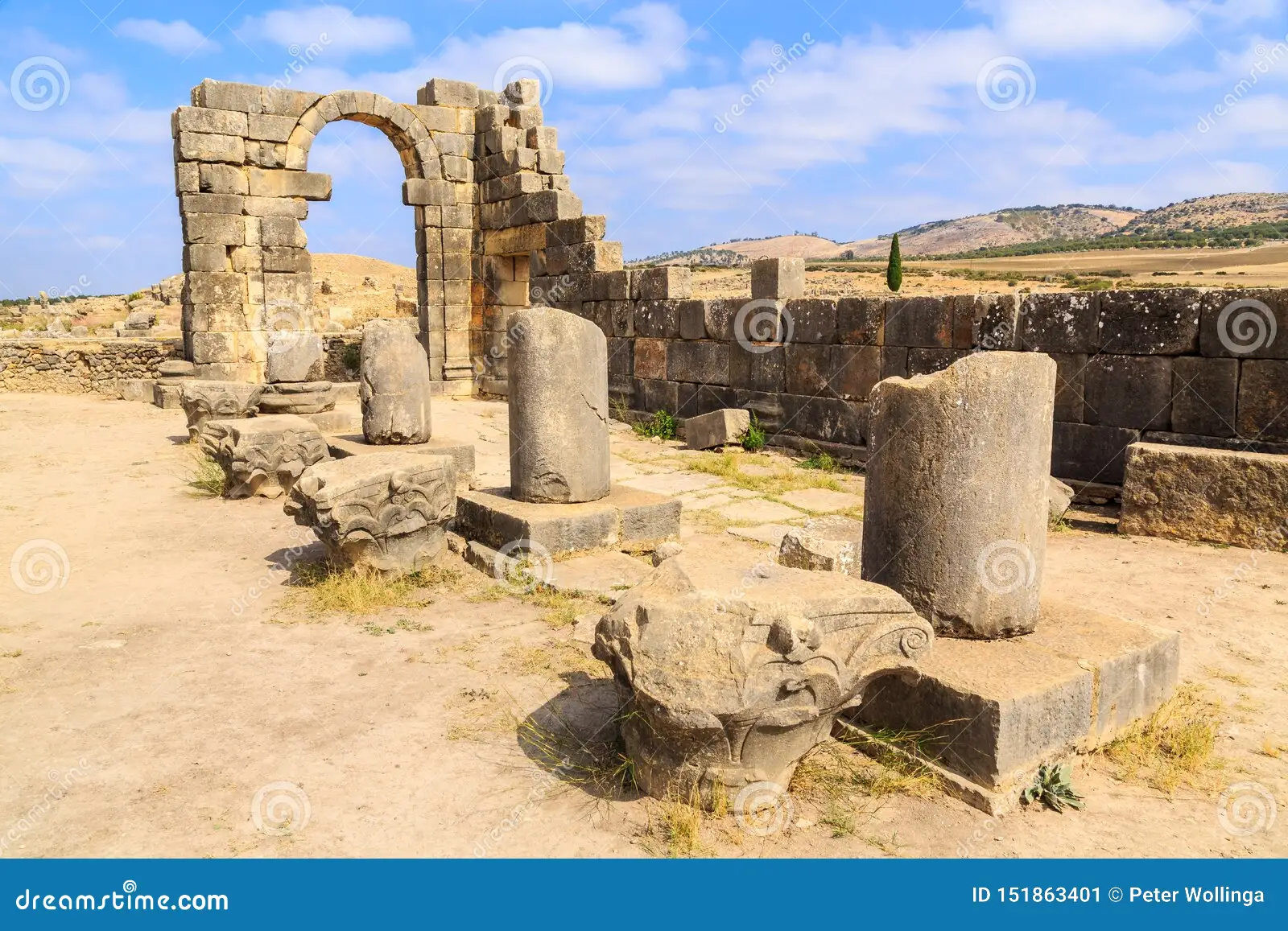
Built in 217 AD to honor Emperor Caracalla and his mother Julia Domna, this triumphal arch marks the ceremonial edge of the Decumanus Maximus. It was partially reconstructed in the 1930s and remains the most photographed structure on the site.
Named for its mosaic depicting Orpheus charming animals with his lyre, this residence also contains a dolphin mosaic in its private bath suite. It belonged to a wealthy merchant family and spans several interconnected rooms.
This former civic and judicial building anchored the city's forum and once featured a two-story colonnaded facade. Its foundations and partial columns still outline the scale of Roman administrative life in the city.
Dedicated to Jupiter, Juno, and Minerva, this temple sat at the highest point of the forum area and was rebuilt around 218 AD. Its restored steps and column bases give a sense of the original elevated platform.
This colonnaded main street once lined with shops stretches roughly 400 meters toward the Tangier Gate at the city's edge. Wheel ruts from Roman carts are still visible worn into the paving stones.
Named for a mosaic showing a nude athlete on horseback holding a victory cup, this residence illustrates the domestic wealth of Volubilis's elite. The mosaic is one of the few surviving depictions of Roman sport imagery in Morocco.
You leave Casablanca before dawn, and the coastal highway gives way to wheat plains somewhere past Rabat. Most day trips from casablanca break the drive near Khemisset for coffee. By the time the road climbs toward Jebel Zerhoun, the white town of Moulay Idriss appears above you in two folded halves. You reach the gate inside the 08:30–10:00 arrival window and buy entry at the main gate for 70 MAD per adult foreign visitor. The site opens at 08:30 every day of the week, and arriving early spares you both the heat and the coach groups that roll in around ten. You cross the interpretation centre, then step onto the olive-press terrace, where the counterweight stones sit exactly where they fell. You climb the paved slope toward the basilica. The ground is uneven — loose stone, low kerbs, no handrails — so you watch your footing rather than the view. At the House of Orpheus you crouch at the edge of the mosaic and pick out the lyre, the circling animals, the tesserae faded to rust and ochre. You walk the Decumanus north, counting column bases, and stop under the Arch of Caracalla where the valley opens east. You finish at the far houses, where storks clatter on the ruins and the wind carries olive dust. Then you turn back down the slope, and the vehicle is waiting where the road ends. Official information: https://visit-volubilis.com/en
All the details about your upcoming adventure in one place
Casablanca sits on the Atlantic coast within easy reach of Rabat, Marrakech, El Jadida and the Roman ruins at Volubilis, which is why day trips from casablanca have become one of the simplest ways to see more of Morocco without changing hotels. Most excursions run by air-conditioned minivan or private car along the A3 and A7 motorways, with a licensed driver-guide handling logistics at each stop. Booking day trips from casablanca tickets in advance usually secures a fixed pickup time and a confirmed seat during the busy summer months.
Volubilis produced olive oil on an industrial scale eighteen centuries before Morocco became a modern state — more than fifty presses have been excavated inside its walls. The city rose on a fertile shelf below Jebel Zerhoun, first as a Mauretanian capital, later as the westernmost administrative anchor of Roman North Africa. Rome withdrew around 285 CE. The town did not empty. Berber, then Islamic, communities held the site for centuries, and Moulay Idriss I is said to have arrived nearby in 788. The Lisbon earthquake of 1755 brought down much of what still stood, and Alaouite builders carried dressed stone away to Meknes. What remains is a ruin shaped as much by later Morocco as by Rome. That layered ownership is why the plateau matters now. UNESCO inscribed the site in 1997, citing an exceptionally well-preserved provincial Roman town in a landscape barely altered since antiquity. Day trips from casablanca reach it in roughly three and a half hours by road, which places a functioning Roman street grid within reach of an Atlantic port city built largely in the twentieth century. Few countries offer that compression. The drive itself passes wheat plains, cork oak, and the white terraces of Moulay Idriss Zerhoun stacked against the hillside. Architecturally, the interest lies in domestic scale rather than monumental bombast. The Capitoline temple and the basilica hold the civic centre, and the Arch of Caracalla frames the Decumanus Maximus at its eastern end. But the substance of the place sits in the townhouses: the House of Orpheus, the House of Venus, the House of the Labours of Hercules. Their floor mosaics remain in situ, uncovered, weathering under open sky — Bacchus with his leopards, Diana surprised while bathing, an equestrian rider crowned with a wreath. Colonnaded courtyards, latrines, cisterns and grain mills survive at the level of ordinary life. Column stumps run in ragged files toward the hills, and storks nest on the tallest of them. The wider region reads as a single itinerary. Meknes, thirty kilometres south, keeps Moulay Ismail's colossal ramparts and the Bab Mansour gate. Fes lies an hour beyond. Rabat, closer to the coast, holds the Chellah necropolis and the Hassan Tower. Volubilis anchors the northern end of that arc, and most casablanca excursion tour routes treat it as the day's principal stop rather than a roadside pause. Guides working the site typically hold accreditation from the Ministry of Culture, and interpretation quality varies sharply, which is why an accompanied day trips from casablanca tour usually returns more than an unguided arrival at the gate. The plateau rewards knowing what the stones once carried.
What remains is a ruin shaped as much by later Morocco as by Rome.
Wear closed, comfortable shoes since the ground is uneven Roman paving with low stone thresholds throughout Volubilis. A wide-brimmed hat and lightweight, breathable clothing are strongly advised, as the exposed hilltop offers almost no shade between April and October.
There is a bag check at the main gate for day trips from Casablanca visitors arriving in tour groups, though security is informal compared to major European sites. Large backpacks and suitcases are discouraged since there is no cloakroom or locker facility on the grounds.
Personal photography, including tripods for still shots of the mosaics and the Arch of Caracalla, is permitted free of charge across the site. Commercial filming or drone use requires prior authorization from the site administration, and flash use directly over exposed mosaic floors is discouraged to limit wear.
Children under a certain age enter at a reduced 30 MAD rate, making Volubilis workable for families doing day trips from Casablanca with school-age kids. There is little shade and no playground or dedicated rest area, so families should pace visits around the midday heat and bring extra water for children.
Volubilis is not well suited to wheelchairs or limited mobility, since most walkways are uneven excavated stone paths without ramps or paved surfaces. Free entry is granted to visitors with reduced mobility, but assistance from a companion is recommended for navigating the site's 40-hectare footprint.
Only the small kiosk near the entrance sells bottled drinks, snacks, and ice cream; no food stalls exist inside the excavated area itself. Visitors may carry their own water and light snacks onto the site, but eating directly on or near the mosaic floors is discouraged to protect the surfaces.
Arrive early, tour buses from 10am
Free entry for Moroccan nationals
Busiest day, weekend groups
Hours
Daily 08:30–18:00, last entry ~17:30
Car · 35 min from Meknes · Free parking on-site
Self-drive from Meknes takes about 35 minutes via the P28 road, with free on-site parking directly beside the entrance.
Public transport · About 1 hour total · Bus/taxi fares roughly 10-30 MAD per leg
Take an inter-city bus or grand-taxi from Meknes to Moulay Idriss Zerhoun, then a local grand-taxi for the final 4 km to the site entrance.
Taxi · 35 min from Meknes, 1h15 from Fes · Negotiated fare, typically 200-400 MAD round trip
A private grand-taxi can be hired directly from Meknes or Fes to Volubilis and back, often with waiting time included.
Bike · 15-20 min from Moulay Idriss · No cost beyond bike rental
Cycling from Moulay Idriss Zerhoun along the rural road is feasible for fit travelers, following flat farmland terrain.
Entry tickets are purchased on-site at the main gate and are non-refundable once issued, with no advance booking required. If a guide is booked separately, cancellation terms are set by the individual guide rather than the site itself, since the 70 MAD entrance fee only covers site access.
Recommended time
1.5-2 hours
Two hours on foot covers the main forum, basilica, triumphal arch, and the best-preserved mosaic houses without rushing; add 30 minutes if you're hiring a guide, since one-hour walkthroughs run long once questions start. Arriving in the 08:30-10:00 window means you're often among the first through the gate, well ahead of the tour buses that cluster around mid-morning, and there's no ticket queue to speak of at that hour. Slot this visit into a full day trips from casablanca itinerary as the first stop before Moulay Idriss and Meknes, since the ruins have zero shade and are far more comfortable to walk before the coach groups and midday sun arrive together.
Crowd levels through the day
Weather · crowds · average price — dots go green to amber to red as each metric rises.
Mild temperatures around 18-24°C and wildflowers across the plain make this a comfortable season for day trips from Casablanca to Volubilis. Crowds are moderate, picking up around Easter holidays.
Temperatures reach 38-42°C with almost no shade on-site, so visiting requires arriving right at opening or in late afternoon. This is peak tourist season with the heaviest tour-bus traffic between 10am and 1pm.
Weather cools to the low-to-mid 20s°C with fewer crowds than spring, making it one of the more comfortable windows for exploring the ruins at a relaxed pace. Occasional early autumn rain can make the paths slightly slippery.
Cold, sometimes misty conditions with occasional rain and light snow on the surrounding Zerhoun hills create an atmospheric but chilly visit. Crowds are lightest this season, though closing time shifts earlier with shorter daylight.
Card payment is not always reliably available at the ticket kiosk, so carry Moroccan dirhams for the 70 MAD entrance fee and any guide fee.
Licensed guides wait near the entrance and charge roughly 200-300 MAD per group for a 90-minute walkthrough covering the main mosaics and monuments.
The plateau has almost no shade, so bring at least 1.5 liters per person since the only kiosk is at the entrance, not inside the site.
The uneven Roman paving and loose stones make sturdy trainers or light hiking shoes far more practical than sandals.
The pilgrimage town is just 4 km away and pairs naturally with a Volubilis stop on the same day trips from Casablanca itinerary.
Moroccan nationals receive free admission on Fridays and on the first day of national holidays, which can mean larger local crowds those days.
The archaeological numbering of excavated houses can be confusing without a legend, and signage on-site is limited.
Volubilis Archaeological Site, near Moulay Idriss Zerhoun, Meknes Province, Morocco
Ticket booth and guide meeting point at the site's southern gate
Get directionsVolubilis Archaeological Site, near Moulay Idriss Zerhoun, Meknes Province, Morocco
On-site gravel parking lot adjacent to the entrance
Get directionsVolubilis began long before Rome. Carthaginian traders reached the site by the 3rd century BC, and a Punic inscription found there records a local sanctuary. The settlement served the Berber kingdom of Mauretania. Juba II, installed as client king in 25 BC, ruled from Volubilis and Iol Caesarea. His son Ptolemy was summoned to Rome and executed by Caligula in AD 40. That killing triggered the revolt of Aedemon and ended Mauretanian independence. Emperor Claudius annexed the kingdom in AD 44, splitting it into two provinces. Volubilis became a leading city of Mauretania Tingitana and received municipium status. An inscription honours Marcus Valerius Severus, the local notable who negotiated Roman citizenship and tax relief for its residents. Ramparts some 2.6 kilometres long, pierced by eight gates, were raised in AD 168-169 under Marcus Aurelius. Wealth came from olives. Excavators have counted more than fifty oil presses inside the walls, and that industry funded the mosaic floors of the House of Orpheus and the House of Venus. This economic story is what most day trips from casablanca skip, though it explains every ruin on the plateau. The monumental phase peaked early in the 3rd century. The basilica and capitol were completed under Macrinus in AD 217, and the triumphal arch was erected in AD 217 by the governor Marcus Aurelius Sebastenus, honouring Caracalla and his mother Julia Domna after their grant of citizenship. Rome withdrew its administration around AD 285, yet the town was never emptied. Latin funerary inscriptions continue to 655, and Christian and Jewish communities persisted. In 788 Idris ibn Abdallah, fleeing the Abbasids, was received at Volubilis, then called Walila, by the Awraba tribe. He used it as his base before the founding of Moulay Idriss Zerhoun beside it. The Lisbon earthquake of 1755 toppled much of what stood. French excavation began in 1915, UNESCO inscribed the site in 1997, and conservation continues today. Visitors booking day trips from casablanca tours often pair the ruins with the holy town on the ridge above. Both Volubilis tour itineraries and independent visits reward slow reading of the mosaics. A guided day trips from casablanca tour explains the presses; day trips from casablanca tickets are sold at the main gate on Volubilis Archaeological Site, near Moulay Idriss Zerhoun.
Carthaginian traders reach the site, leaving Punic inscriptions at a local sanctuary.
Juba II is installed as client king of Mauretania and rules partly from Volubilis.
Claudius annexes Mauretania after the revolt of Aedemon and Volubilis becomes a municipium.
Ramparts of roughly 2.6 kilometres with eight gates are built under Marcus Aurelius.
The basilica, capitol and the arch honouring Caracalla and Julia Domna are completed.
Roman administration withdraws south of the Loukkos, though the town remains inhabited.
Idris ibn Abdallah is received by the Awraba at Walila before founding Moulay Idriss Zerhoun.
French archaeologists begin systematic excavation; UNESCO inscribes the site in 1997.
The triumphal arch anchors the north end of the Decumanus Maximus and is the classic frame for Volubilis: stand back on the paved street to get the full arch with the Zerhoun hills behind it, or move underneath and shoot up through the archway. Morning light in the 08:30-10:00 window rakes across the stonework and avoids the flat glare of midday.
Volubilis' main street runs in a straight line from the arch past the wealthiest houses, giving a strong converging-lines shot down the colonnade of surviving columns. Walking this stretch is one of the better introductions to Roman day trips from Casablanca that pass through the Meknes region, since the street ties the whole site together visually. Shoot from ground level to exaggerate the column line, or from a slightly raised threshold for a wider view.
Inside this large townhouse, the Orpheus mosaic showing him charming animals with his lute is the standout detail shot, with a separate dolphin mosaic in the old dining room nearby. Get low and shoot straight down for even, shadow-free color, since these floors sit in open air with no roof to block light.
Marked by a lone cypress tree across the Decumanus, this house holds the Abduction of Hylas by the Nymphs and Diana Bathing mosaics, two of the most detailed compositions on site. Frame tightly on the figures rather than the whole room to bring out the tesserae detail, and arrive early since this corner gets busy once tour groups arrive.
A short rise east of the Capitol and Forum gives an elevated overview of the ruined city with the arch and colonnade visible in one frame, useful for a single establishing shot of the whole visit. It's an easy, unmarked stop rather than a formal viewpoint, so just look for the path leading up from the forum area.
Options at Volubilis itself are limited to a small café by the entrance, so most visitors on day trips from Casablanca save the real meal for Moulay Idriss Zerhoun, a short drive away with terraces overlooking the ruins.
Coffee, mint tea, and simple snacks right by the ticket gate — useful for a quick break before or after the ruins, but there's nothing to eat once you're inside the site itself.
The best-known terrace in Moulay Idriss Zerhoun, with panoramic views over Volubilis and the surrounding hills; order the tagine or vegetarian pastilla and expect it busy around midday tour groups.
Perched above the town with sweeping views toward Volubilis, this is more of a booked-ahead tasting experience than a casual lunch stop, best suited to travelers planning a fuller day trips from casablanca tour rather than a quick bite.
A rooftop terrace facing the ruins serving tagines and couscous; reviews note it leans pricier than elsewhere in town, so it suits travelers who want the view more than a bargain meal.
Real experiences from real travelers
We booked one of the day trips from casablanca that runs up the coast to Rabat, and the Kasbah of the Udayas in late morning light was the part I keep thinking about. The blue lanes are narrow enough that you hear voices before you see anyone. Bring something for the wind on the seawall — it was fierce even in June.
The drive inland is long but the wheat plains turn gold about an hour before you reach the Roman site. Standing among the columns with almost no one else around felt strange in the best way, and our guide pointed out mosaic details I would have walked straight past. Sturdy shoes matter, the paving is uneven.
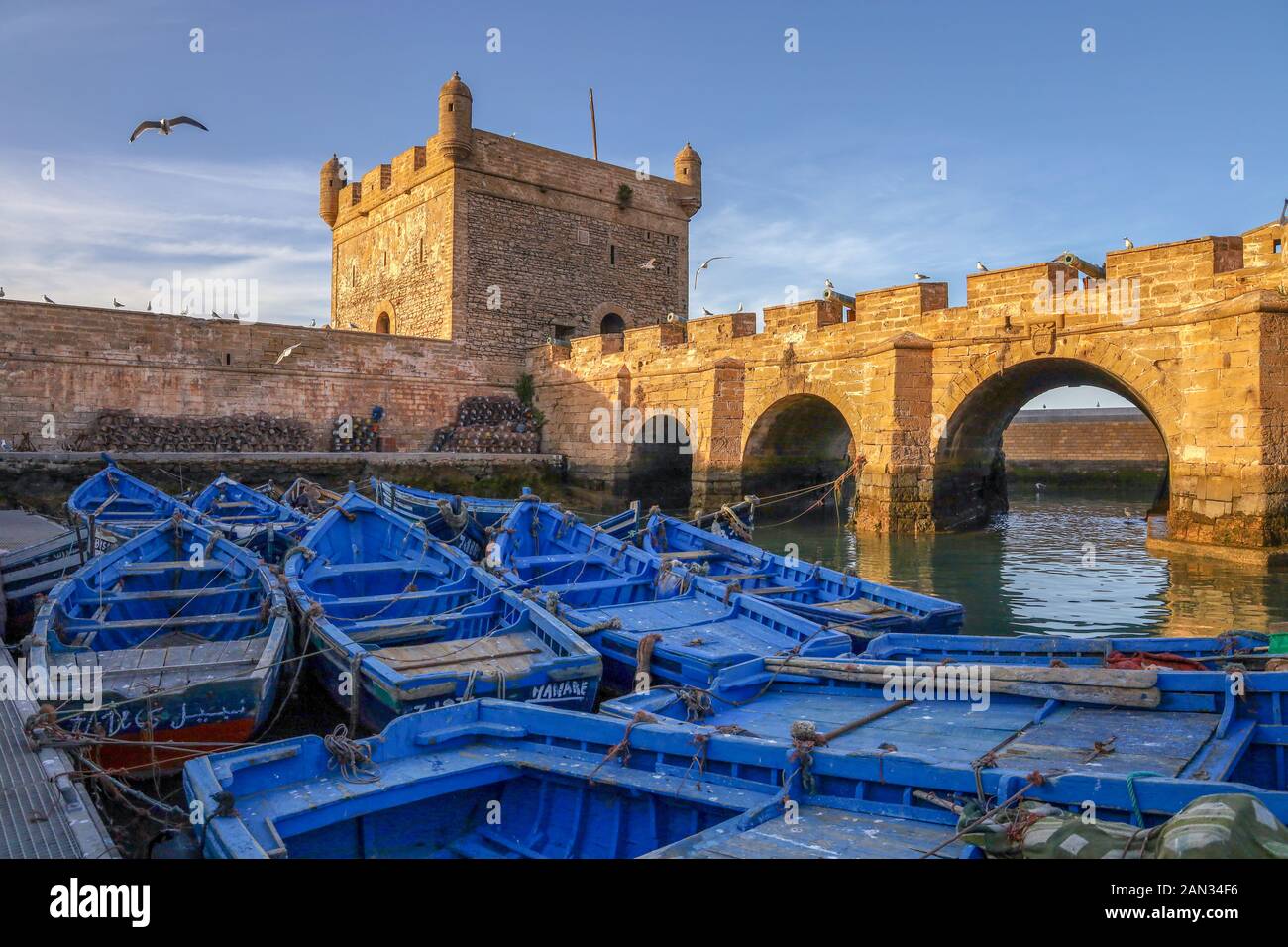
Essaouira day trip tickets were easy to arrange and the ramparts at the end of the afternoon smelled entirely of salt and fried sardines. The blue fishing boats packed into the harbour are exactly as photogenic as everyone says. The road there is winding, so sit near the front if you get carsick.
Six hours of driving total on our Casablanca countryside tour, which nobody quite warned us about, though the argan groves and roadside goat herds kept it interesting. Meknes and its enormous gateway were more impressive in person than in photos. I would have liked a little more free time to wander on our own.
Notre chauffeur spoke French and Arabic and explained the layout of the imperial cities without rushing us. The excursions au départ de Casablanca that include Meknes and Volubilis together give you two very different atmospheres in one day. February was cool and grey inland but pleasantly empty.
I expected the drive to be dull and instead spent most of it watching the Atlantic on one side and eucalyptus windbreaks on the other. El Jadida's Portuguese cistern was cold and echoing, a nice contrast after the heat outside. Small group meant we could stop for photos when we asked.
Leaving at seven in the morning made all the difference — by the time we reached the ruins the stone was already hot to touch. Our driver kept cold water in a cooler which I appreciated more than I expected. If you are considering day trips from casablanca in midsummer, take the earliest departure offered.
The Chellah necropolis with its storks nesting on the old minaret was the unexpected favourite of the day. Storks clacking overhead while you walk through ruins covered in wildflowers is not something I had pictured. Our guide was patient with a lot of questions.
The Essaouira medina deserves longer than the two and a half hours we had, though I understand the constraints of the distance. Woodworkers carving thuya in the little workshops near the port were happy to talk. Overall a solid introduction to the coast south of the city.
Reserving our day trips from casablanca tickets online took about five minutes and the confirmation came through immediately. Air conditioning worked, the van was comfortable, and pickup from our riad was exactly on time. September light on the ramparts around six in the evening was worth the whole trip.
Everything you need to know for your journey
Volubilis is open daily from 08:30 to 18:00, with last entry around 17:30, making early morning the ideal start for day trips from Casablanca.
Volubilis has uneven excavated stone paths without ramps, so it is not fully wheelchair accessible, though visitors with reduced mobility receive free entry and should bring a companion for assistance.
Large suitcases, drones without authorization, glass bottles, and climbing on the ruins are all prohibited, and there is an informal bag check at the main gate.
Personal photography is free and permitted throughout the site, including tripods for still shots, though commercial filming and drone use require prior authorization.
Arriving between 08:30 and 10:00 avoids both the midday heat and the tour groups that typically arrive around 10am, making this the best window for day trips from Casablanca.
There is no strict dress code, but comfortable closed shoes and a sun hat are strongly recommended given the exposed, shadeless terrain.
Visitors may carry their own water and light snacks, though the only food and drink for sale is at a small kiosk near the entrance, not inside the ruins themselves.
Most day trips from Casablanca arrive by car or organized tour via Meknes, a roughly 35-minute drive from Volubilis, with free parking available on-site.
Yes, children pay a reduced 30 MAD entry fee, though families should plan around the heat and lack of shade, especially in summer months.
Tickets are purchased on-site and are non-refundable once issued, since the 70 MAD entrance fee only covers same-day site access with no advance booking required.
Moulay Idriss Zerhoun, just 4 km away, and the imperial city of Meknes with its Bab Mansour gate are both easily combined with a Volubilis visit.
No advance booking is required for standard entry; tickets and any skip-the-line arrangements through guided tours are handled at the main gate or through a tour operator beforehand.
A hillside pilgrimage town founded by Idriss I, with whitewashed houses cascading down two hills. Non-Muslims can view the Mausoleum of Moulay Idriss from a designated terrace but not enter.
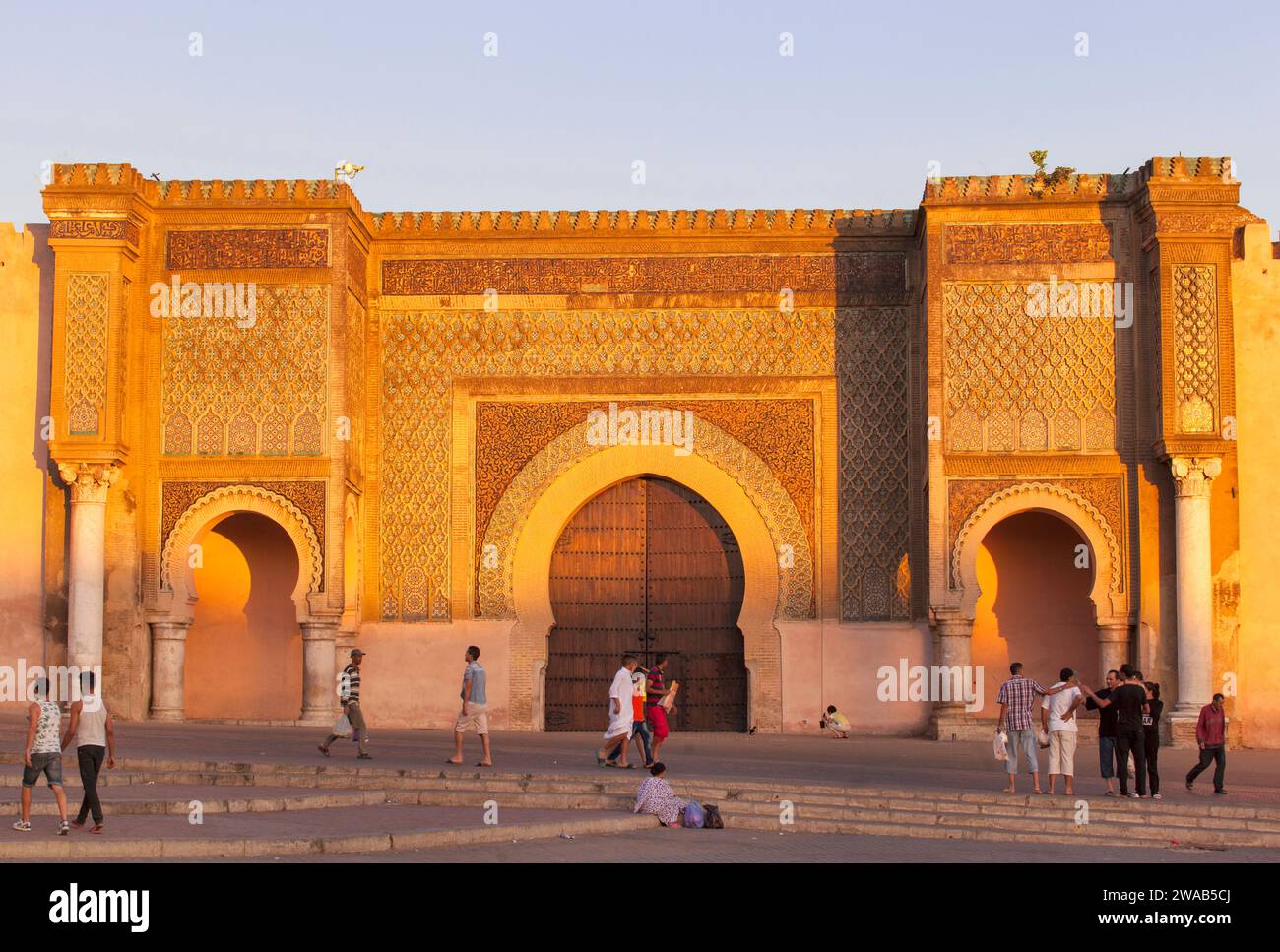
An ornate 17th-century gate marking the entrance to the imperial city of Meknes, decorated with zellige tilework and marble columns.
Vast former royal granaries and stables built under Sultan Moulay Ismail, notable for their thick walls and cool interior temperatures.
A UNESCO-listed old town with narrow souks, artisan workshops, and the historic Dar Jamai palace museum nearby.
Several riads and mid-range hotels cluster around the medina and Hedim Square, convenient for combining Volubilis with Meknes sightseeing.
A handful of small guesthouses and riads in the hillside town offer close proximity to Volubilis for early-morning visits.
Fes offers upscale riads and boutique hotels within the old medina, suited to travelers combining Volubilis with a longer Fes stay.
Join thousands of happy travelers who have discovered this incredible experience
Book Your Experience Now