8 hr
Casablanca Layover Private City Tour & Airport Transfer
- Private experience
- Personal attention
- Premium amenities
- Free cancellation
Casablanca Layover — Guided Mosque Entry Between Flights
Land at dawn on the Atlantic, leave with minarets behind you.
Compare fares, pick the fit — all bookings are mobile-voucher and eligible for free cancellation where shown.
8 hr
4 hr 30 min
5 hr
Worth it if you get inside; otherwise skip
A casablanca layover buys you one real decision: pay the 140 MAD guided tour ticket (foreign adult, per person) or stand on Boulevard de la Corniche and look at the Hassan II Mosque for free. The fee is the only key non-Muslims have to the prayer hall, the cedar ceiling, the titanium-and-zellige detailing and the hammam level below — no free entrance exists, and no exterior angle substitutes for standing under that roof. Against typical Moroccan admission prices, 140 MAD is on the steep end, and casablanca layover tickets are sold per person with no meaningful discount for couples or small groups. It pays off if the Atlantic-facing interior and the guide's commentary are the reason you left the airport at all. If you mainly want the silhouette over the water for your camera, the free esplanade view already gives you most of what casablanca layover tours are selling.
Bottom line: Book the guided mosque tour if the interior is the point of your stopover — otherwise keep your dirhams and admire it from the seawall.
Hand-picked experiences loved by thousands of travelers
5 hours
Free Cancellation
Maximize your layover with a seamless guided tour of Casablanca’s top landmarks, including convenient round-trip airport transport.
5 hours
Free Cancellation
Explore the iconic sights of Casablanca, from the stunning Hassan II Mosque to the charming Habous Quarter, with convenient hotel transfers.
1 hour
Free Cancellation
Seamless, stress-free door-to-door transport from Mohammed V Airport directly to your Casablanca accommodation.
Reach the on-site ticket office at Boulevard de la Corniche and buy the foreign-adult ticket for 140 MAD before the next tour slot fills.
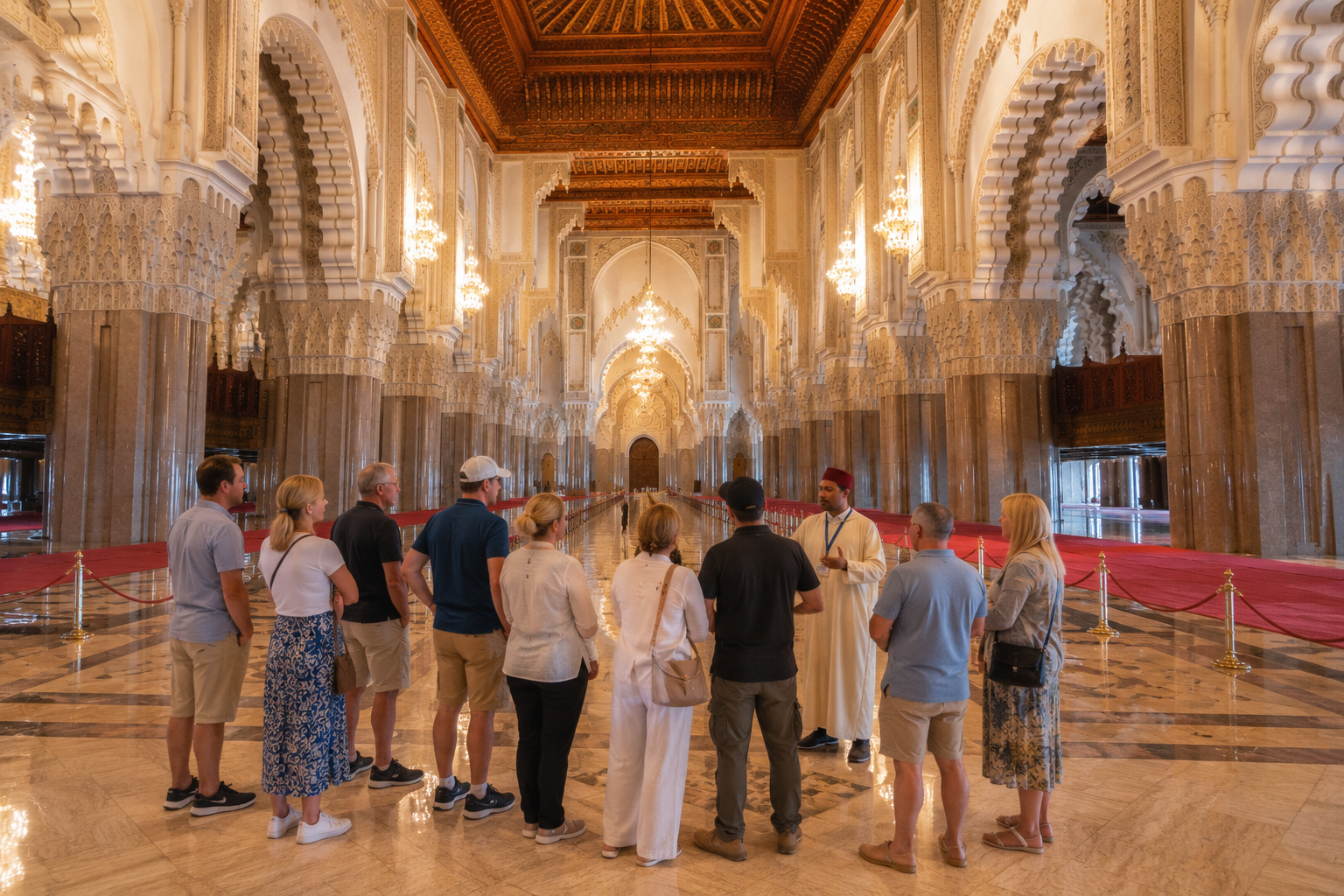
Pass through the bag screening checkpoint, then remove shoes and place them in the bag your guide provides.
Cross the marble sahn overlooking the Atlantic Ocean while the guide explains the mosque's oceanfront construction.
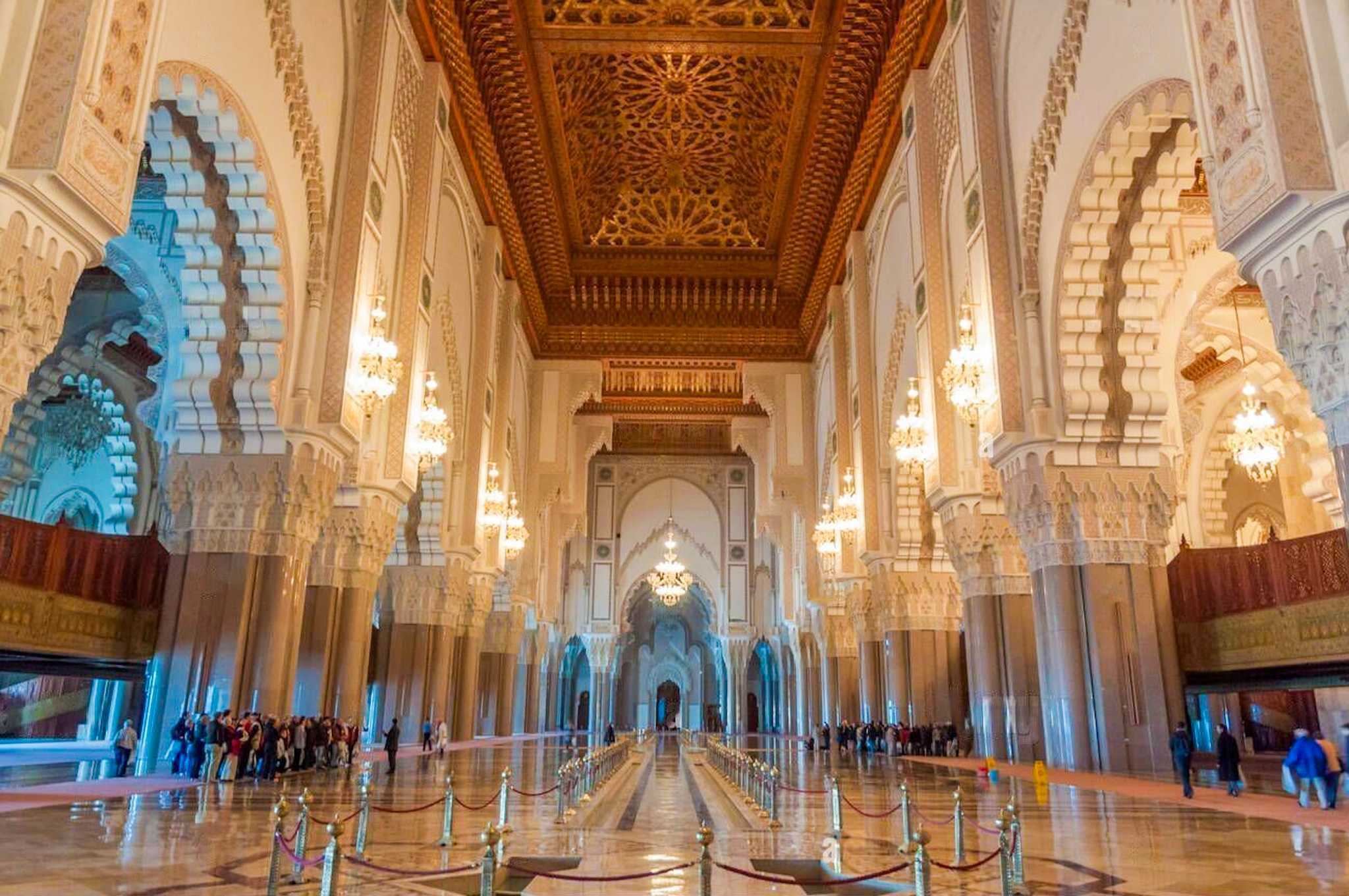
Walk through the vast interior beneath the retractable cedar roof, viewing the mosaics, chandeliers, and glass floor panels.
See the lower-level washing areas and hammams before exiting the tour route near the mosque museum.
The vast interior holds up to 25,000 worshippers beneath a retractable cedar roof weighing roughly 1,100 tons that can open in about five minutes. Marble floors and carved plasterwork surround visitors, with sections of glass flooring offering a view toward the Atlantic below.
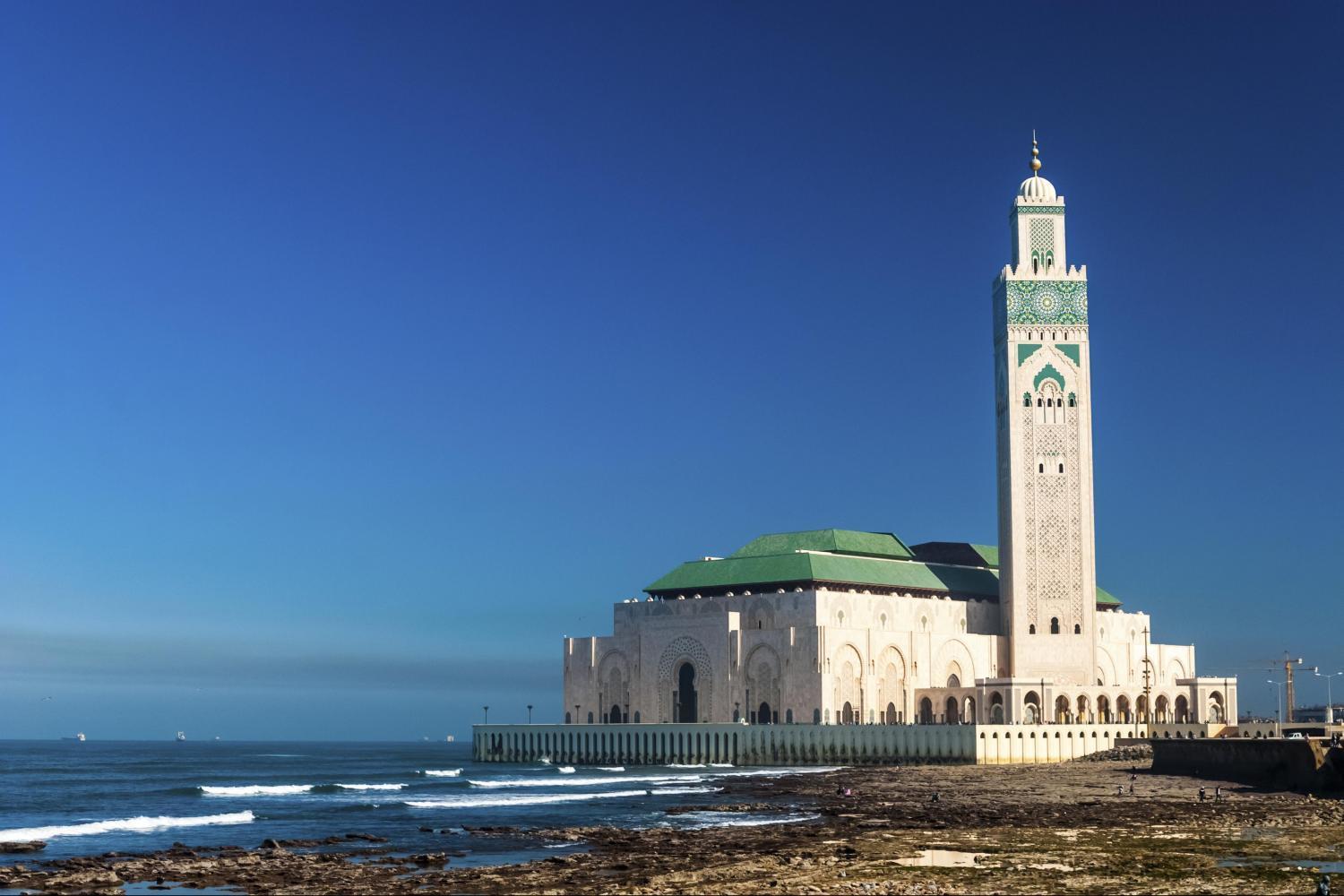
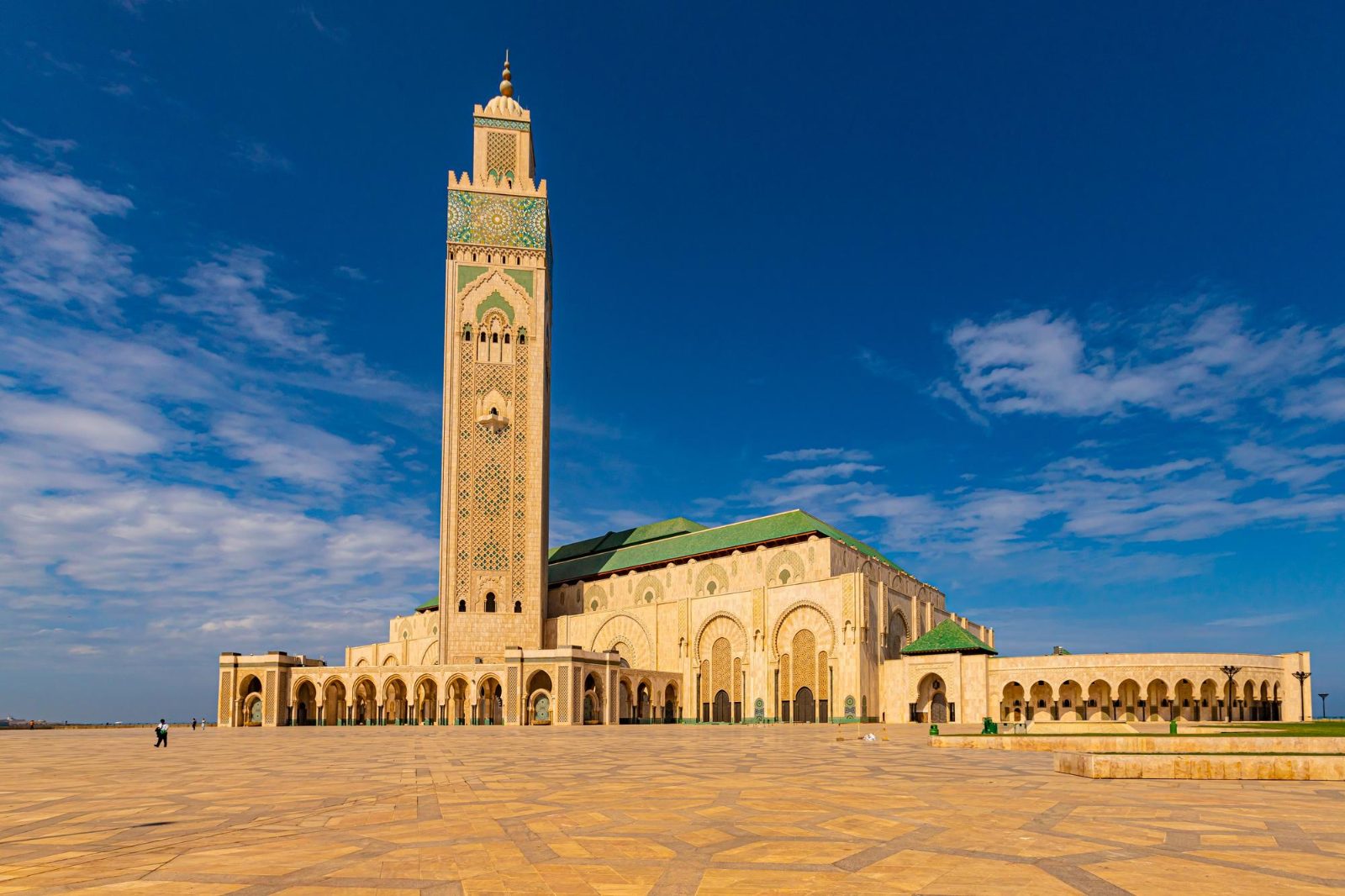
Standing 210 meters tall, the minaret is the tallest in Morocco and one of the tallest religious structures in the world, topped with a laser that projects toward Mecca. It anchors the southern edge of the complex and is visible across much of the city skyline.
This marble courtyard can hold an additional 80,000 people beyond the prayer hall's capacity, giving the complex a combined worship capacity of 105,000. Atlantic sea spray regularly coats its surface, and guides note it can become slippery on windy days.
Fifty-seven chandeliers imported from Murano near Venice hang throughout the prayer hall, with the largest weighing around 1,200 kilograms and requiring a motorized winch for maintenance. They are among the only non-Moroccan materials used in the entire structure.
Beneath the main hall sit vast public hammams covering a combined 6,000 square meters, split into separate equally sized sections for men and women. Few visitors realize this underground space exists, since most tours focus on the hall above.
Roughly one-third of the mosque's foundation extends directly over the Atlantic Ocean, creating the impression that worshippers pray above the water. The titanium doors facing the sea were chosen specifically to resist ocean-air corrosion.
You arrive at Boulevard de la Corniche between 09:00 and 10:00, when the first tour slot opens and the coaches have not yet arrived. You buy or present casablanca layover tickets at the visitor entrance, then wait on the vast marble esplanade while your guide gathers the group by language. The Atlantic is directly behind you, loud. You remove your shoes and carry them in the bag provided. Inside, you step onto heated stone and look up: the ceiling is cedar, hand-carved, and it opens. Your guide points out the retractable panels, then walks you along the length of the prayer hall toward the mihrab. You pause at the chandeliers, cast in Murano glass. You count the columns. Everything is bigger than the photographs suggested and quieter. You descend to the ablution level. Here the light drops, the sound softens, and you pass rows of lotus-shaped granite fountains set into vaulted alcoves. You touch the cold stone. Most people photograph the prayer hall and forget this floor; you will not. You come back up, collect your shoes, and walk out onto the seaward terrace. The mosque doors close to visitors at 16:00, so you have room. You circle the exterior slowly, watching spray hit the sea wall, then follow the promenade back toward the road and your onward flight.
All the details about your upcoming adventure in one place
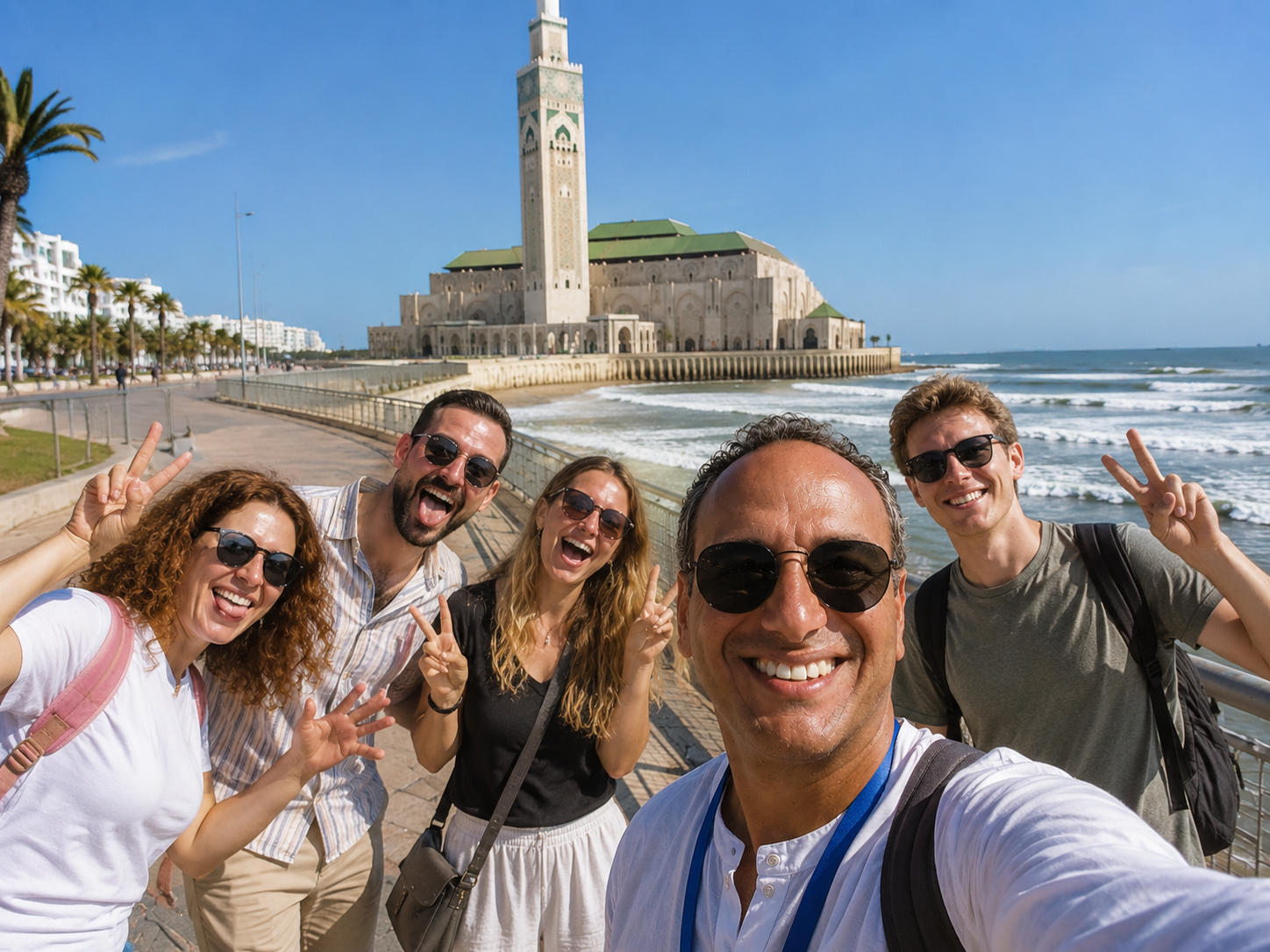
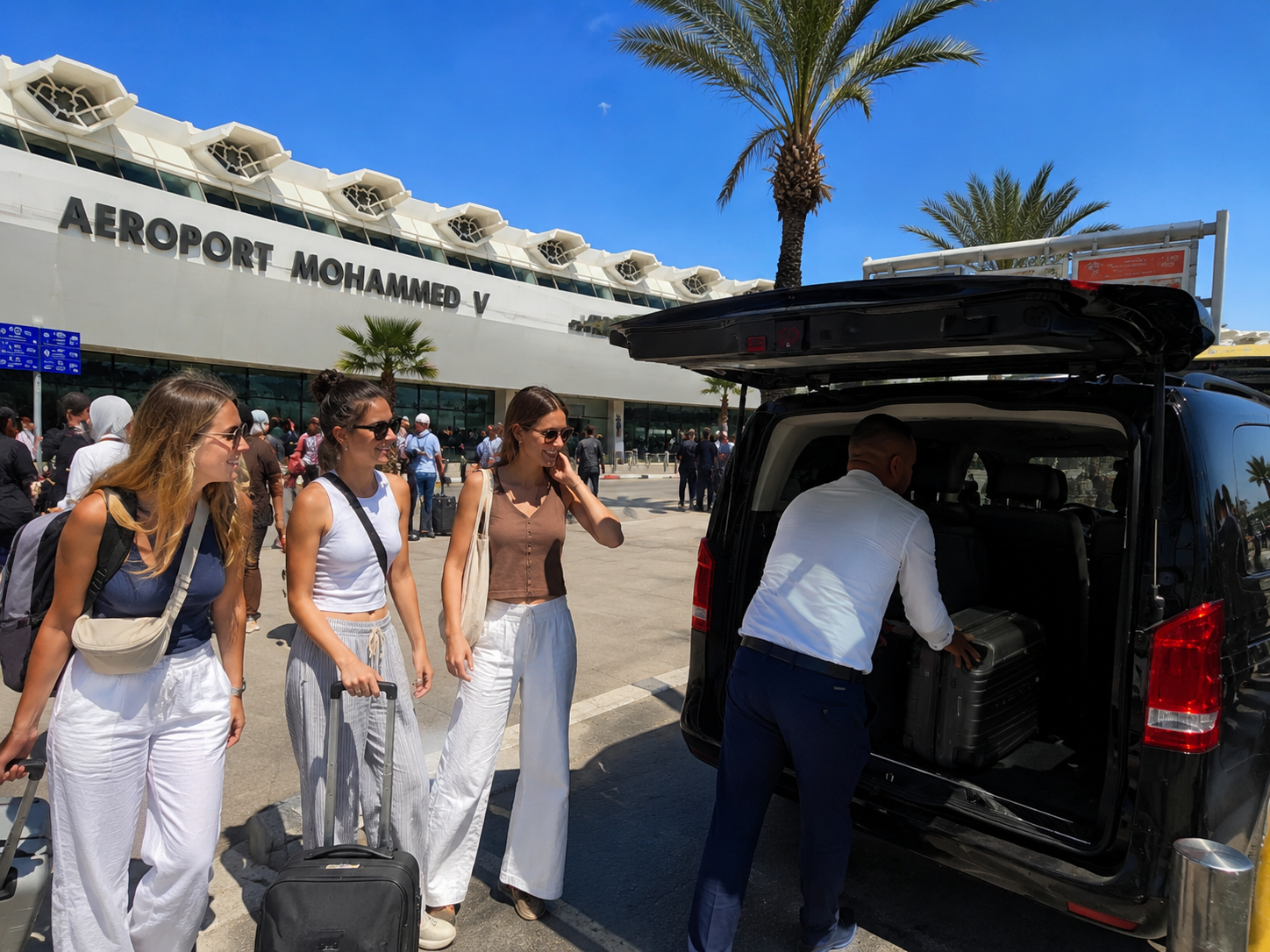
A casablanca layover turns waiting time at Mohammed V International Airport into a run along the Atlantic corniche, past the Hassan II Mosque minaret and the whitewashed art deco facades of the Habous quarter. Private casablanca layover tours run door-to-door from arrivals, covering the roughly 30 kilometres into the medina and Mohammed V Square with a driver who tracks your onward departure. Guides speak Darija and French, and most itineraries fold in Rick's Café, the Corniche promenade and the Mahkama du Pacha.
A third of the Hassan II Mosque stands over the Atlantic, its prayer hall cantilevered above water rather than earth — a literal reading of the Quranic line about God's throne resting upon the sea. That decision, taken when the site was chosen along Boulevard de la Corniche, shaped everything that followed: the salt-resistant concrete, the titanium-clad doors, the sea wall that absorbs winter swells. Casablanca is a young city by Moroccan standards, and this is its anchor. Rabat has its Almohad tower, Fes its Qarawiyyin, Marrakech its Koutoubia. Casablanca, a port that swelled from a fishing settlement into North Africa's commercial capital within a single century, needed a monument that could hold that weight. The mosque supplies it. Its minaret is visible from ships approaching the harbour and from the coastal road running south toward El Jadida, which is why nearly every casablanca layover routes through this address rather than the art deco downtown. The craftsmanship is the argument. Roughly six thousand Moroccan maalems — master artisans in zellij tilework, carved cedar, and chiselled stucco — worked the interiors by hand, using techniques inherited from Merinid workshops. Cedar came from the Middle Atlas, marble from Agadir and Tadla, granite from Tafraoute. The prayer hall's retractable roof opens to the sky. Beneath it, the floor is heated. Below that, the hammam and ablution chambers form a vaulted lower level of pink granite fountains, rarely photographed and often the part visitors remember longest. What makes the site unusual among Moroccan landmarks is access. Most functioning mosques in the country are closed to non-Muslims. This one is not, which is why casablanca layover tours exist at all as a category. Entry is by guided visit only, priced at 140 MAD for a foreign adult, and the guiding is substantive — commentary covers the geometry of the zellij, the symbolism of the mihrab, the engineering of the foundations. Context matters here as much as ornament. The Corniche around the mosque is a working promenade: joggers at first light, families at dusk, fishermen on the rocks below the esplanade. The building does not sit apart from the city. It faces it. Visitors arriving on a casablanca layover tour tend to expect a monument and find instead an active place of worship with a school, a library, and a museum attached, still very much in use on an ordinary Thursday. The Atlantic supplies the rest — light off the water, spray on the granite, and a horizon that explains why the architects turned the whole structure to face it.

The building does not sit apart from the city. It faces it.
Shoulders, chest, and knees must be covered for both men and women before entering the prayer hall, and a light scarf is useful for women who prefer to cover their hair, though it isn't compulsory. Shoes are removed at the door and carried in a bag provided by the guide, so slip-on footwear makes the process faster. Tight, sheer, or sleeveless clothing is routinely turned away at the entrance during a Hassan II Mosque visit.
Bags are screened at a security checkpoint before entering the courtyard, similar to airport-style scanning, and daypacks or small backpacks are generally fine. Large suitcases or oversized luggage are not permitted inside and have no on-site storage, so travelers doing a casablanca layover stop should leave big bags at the hotel or airport. Guides carry the plastic bag for removed shoes throughout the tour.
Still photography is permitted throughout the prayer hall, courtyard, and ablution areas during the guided tour. Video recording is not allowed inside the mosque, and tripods or professional rigs require separate authorization from mosque staff. Flash use near carved plasterwork and mosaics is discouraged out of respect for other visitors.
Children under 6 enter free, while children over 6 and Moroccan students pay a reduced 30 MAD rate; there is no minimum age requirement for the tour itself. The flat, open courtyard and prayer hall are easy for strollers, and kids often enjoy the glass floor panels that look toward the ocean below. Tours run about 45 minutes to an hour, a manageable length for most families doing a Casablanca landmarks stop on a layover.
The courtyard and prayer hall floors are flat marble, making wheelchair and stroller movement straightforward across most of the route. Ramps and elevators cover key sections of the complex, though the minaret's interior is not open to public visitors regardless of mobility. Staff will adjust the walking pace of the guided tour on request for visitors with limited mobility.
Eating, drinking, and smoking are not permitted inside the mosque at any point during the guided tour. Water bottles can be carried but should stay sealed or in a bag until visitors are back outside the complex. There are no food concessions inside the ticketed tour route itself.
First tour 09:00, last tour 16:00
Quietest weekday
Prayer breaks shift tour times slightly
Busiest day, tour buses arrive late morning
Hours today
09:00 – 16:00, guided tours on the hour;location
Public transport · 20-30 min · Around 8-10 MAD per tram ride
Tramway Line T1 or T2 stops within a 10-15 minute walk of the mosque, followed by a short stroll along Boulevard de la Corniche.
Taxi · 15-25 min from city center · Roughly 20-40 MAD from downtown
Petit taxis are widely available across Casablanca and are metered for trips to the Corniche; drivers know the mosque by name.
Car · 20-30 min from Casablanca Voyageurs station · Parking typically a few MAD per hour
Free street parking and a paid lot sit near the esplanade, though spaces fill quickly once tour buses arrive after 10:00.
Walk · 20-30 min from the medina · Free
Feasible from the old medina and nearby Corniche hotels along the coastal boulevard, with sea views the whole way.
Guided tour tickets for a casablanca layover visit are sold on-site at the mosque's own ticket office and are non-refundable once purchased, since the 140 MAD foreign-adult fee covers a fixed tour departure time. Third-party pre-booked tours typically allow free cancellation up to 24 hours before the scheduled slot; check the specific operator's terms at booking.
Recommended time
2-3 hours
Budget 2 to 3 hours total for a casablanca layover stop at Hassan II Mosque: the guided tour itself runs 45 minutes to an hour, plus 30 minutes to arrive, buy tickets, and pass security, and another 30-45 minutes to wander the Corniche-facing exterior and courtyard afterward. Add time if you're joining one of the broader casablanca layover tours that bundle the mosque with the Old Medina or Habbous Quarter, since those city-stop combinations run closer to half a day. Subtract time if you already hold pre-booked casablanca layover tickets and only want the interior visit, skipping the exterior wander. Queues build fast once tour buses roll in, so treat the 09:00-10:00 slot as protected time rather than a suggestion.
Crowd levels through the day
Weather · crowds · average price — dots go green to amber to red as each metric rises.
Mild coastal temperatures around 12-18°C and lighter crowds make winter mornings comfortable for the courtyard walk, though occasional rain can shorten outdoor time.
Daytime highs around 18-23°C and clear skies make spring one of the most pleasant windows, with tour buses picking up by April.
July and August bring the heaviest crowds and warm, humid conditions near 25-28°C, so morning tour slots feel noticeably less crowded than midday.
Temperatures ease back to the high teens and low 20s°C with thinner crowds after the summer peak, making September and October a comfortable stretch for photography around the exterior.
Tickets are sold only on-site in Moroccan dirhams, so bring 140 MAD per foreign adult in cash to avoid card-payment delays at the counter.
Cover shoulders and knees before arriving, since guards turn away visitors in shorts or sleeveless tops at the entrance.
Shoes come off before the prayer hall, so laced boots slow down the group compared to sandals or slip-ons.
Friday tours shift around midday prayers, so confirm the day's slot times before planning a casablanca layover tour around them.
The marble courtyard can get slick with sea spray on windy days, so flat-soled shoes reduce slipping risk.
The seafront boulevard right outside the mosque makes an easy add-on walk before or after the tour.
Public displays of affection are discouraged inside the complex, including hand-holding, per visitor reports.
The mosque's underground hammams are rarely mentioned by guides, so ask if the tour route includes a look at this area.
Boulevard de la Corniche, Casablanca 20000
Start point for all guided tour groups; arrive 15 minutes before your slot
Get directionsBoulevard de la Corniche, near the mosque forecourt
Common pickup spot for organized tour groups and drivers
Get directionsThe story begins with a speech. On 8 July 1980, King Hassan II announced his intention to build a great mosque on the Atlantic shore, framing it as a gift from the Moroccan people to themselves. He cited a Quranic verse describing God's throne upon the water. The choice of Casablanca was deliberate. The country's older imperial mosques stood in Fez, Marrakech, Meknes and Rabat; the commercial capital had no monument of comparable weight. Travellers on a casablanca layover often assume the building is ancient, and the truth is more interesting. The site had to be manufactured. Engineers reclaimed land from the sea off Boulevard de la Corniche, driving foundations into a seabed that had to be armoured against Atlantic swell before a single wall rose. The French architect Michel Pinseau produced the design; the civil works were executed by Bouygues. Construction ran from 1986 to 1993, seven years of continuous labour. Reports place around 10,000 artisans and workers on site, many working double shifts through the final years. Moroccan maâlems cut cedar from the Middle Atlas, carved plaster and set zellige tilework by hand. Venetian glassmakers supplied chandeliers, one of the few foreign contributions to an otherwise fiercely national programme of craftsmanship. Marble came from Agadir and Tafraoute; only the granite columns and the glass were imported. The financing proved the most contested chapter. The project was funded largely through public subscription, a nationwide campaign in which contribution was, in practice, difficult to refuse. Receipts were issued; the sums raised were substantial. Critics abroad questioned the cost in a country with pressing social needs, and that debate has never fully closed. Hassan II inaugurated the mosque on 30 August 1993, the eve of the Prophet's birthday. What survives is a working mosque and one of the few in Morocco open to non-Muslims, which is why guided casablanca layover tours reach it at all. Visitors booking casablanca layover tickets encounter a monument barely three decades old, already central to any list of Casablanca landmarks. The single casablanca layover tour worth the detour, for many, is this one.
King Hassan II announces the project in a speech on 8 July, dedicating it to the Moroccan people.
Construction begins on reclaimed land off the Atlantic shore at Boulevard de la Corniche.
Michel Pinseau's design is executed by thousands of Moroccan maâlems working alongside Venetian glassmakers.
A nationwide public subscription campaign raises the bulk of the funds, drawing lasting criticism abroad.
Hassan II inaugurates the mosque on 30 August, the eve of the Prophet's birthday.
The mosque opens to non-Muslim visitors on guided tours, unusual among Moroccan mosques.
Guided tours run daily 09:00–16:00, with the first slot the quietest before coach groups arrive.
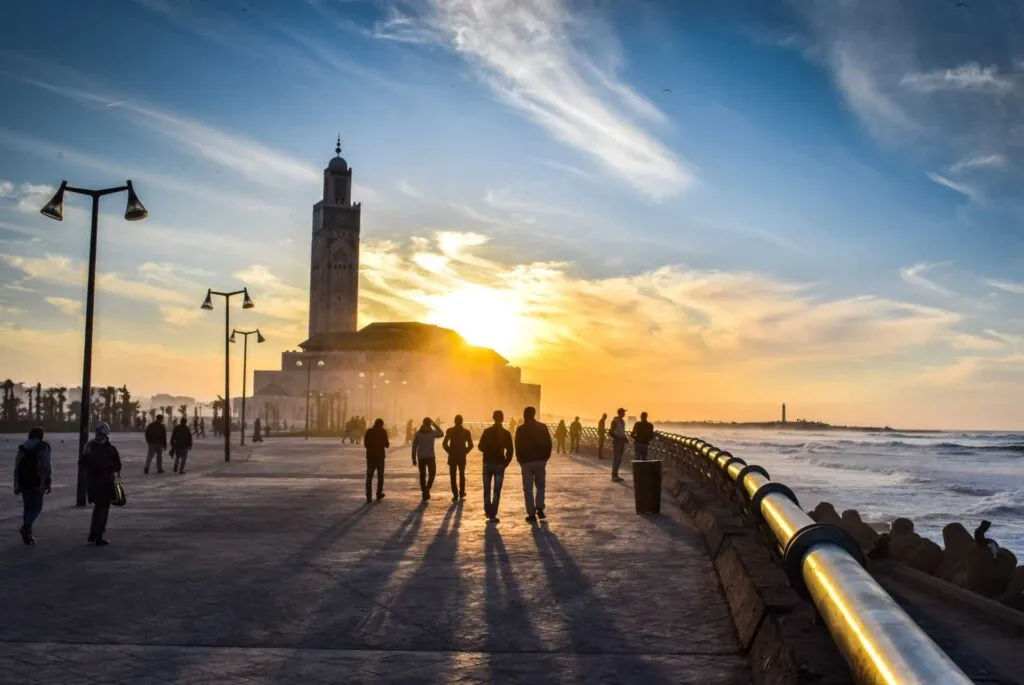
The classic wide shot: stand on the sea wall along Boulevard de la Corniche with waves breaking below and the full mosque and 210m minaret framed against the Atlantic. Many people fit this stop into a casablanca layover between flights, since it sits minutes from the mosque entrance. Shoot from either side of the boulevard for slightly different angles on the facade.
From the huge paved plaza in front of the mosque, stand back near the outer edge and shoot straight up to capture the full 210-metre minaret against the sky, with the green-and-white tilework visible in daylight. This spot also works for skip-the-line hassan ii mosque tour groups gathering before entry. Wide-angle lenses help fit the whole tower in frame.
A short taxi ride west along the coast, the Ain Diab boardwalk offers a pulled-back view where the mosque appears as a landmark on the horizon line above the beach and surf. It suits anyone doing a casablanca corniche tour along the wider seafront rather than just the mosque grounds.
Inside the main prayer hall, the roof panel that slides open in under five minutes overhead is the signature interior frame, with rows of columns and carved cedar ceiling detail. Photography is allowed on the guided tour but tripods and flash are restricted. Position near the center aisle for the most symmetrical view of the ceiling and the space below it.
Along the exterior arcade at the minaret's base, a sequence of carved arches and columns creates a repeating-pattern shot with zellige tilework as a focal accent. Stand at the far end of the corridor to compress the arches into a single receding line.
The mosque itself has no on-site restaurants, but the Corniche seafront a short walk or taxi ride away covers most needs before or after a casablanca layover mosque stop, from quick coffee to full seafood lunches.
Set inside an old bastion near the Medina, it's the easiest walkable option, known for fresh bread and mint tea at breakfast and tagines at lunch; gets busy on weekends, so arrive early.
A sit-down spot beneath the El Hank lighthouse with ocean views toward the mosque, best for a relaxed lunch of grilled fish; reservations help at peak lunch and sunset hours.
Moroccan and international dishes in a 1940s-style riad near the old Medina; popular with casablanca layover tours groups, so book ahead for lunch or dinner seating.
Several casual cafés line the boulevard for a fast coffee or fresh juice between mosque visits and a stroll; useful for travelers doing a quick skip-the-line Hassan II run rather than a full meal.
Real experiences from real travelers
Our connection to Dakar gave us six hours and we used every one of them on a casablanca layover tour that started at the mosque and ended near the Corniche. The Atlantic wind off the seawall was stronger than expected, so bring something with sleeves even in June. Our driver knew exactly which door to use at the airport arrivals hall.
Hassan II Mosque is genuinely enormous up close, and standing on the marble platform with waves hitting the granite below is something photos undersell. We had booked casablanca layover tickets a week ahead and the pickup was waiting with a sign. Traffic on the way back was heavy around 5pm but we still made the gate with time.
I was nervous about leaving the terminal with only five hours between flights, but the driver handled everything and gave us a rough timeline at the start. The Old Medina lanes smelled of mint and grilled sardines in the middle of the afternoon. Casablanca layover tours seem built for exactly this kind of tight window.
Between the mosque, the Mahkama du Pacha and the Habous quarter it was a lot of ground for one afternoon, and the last stop felt clipped. Still, seeing the zellige tilework and cedar ceilings in person beat sitting in a departures lounge. The Art Deco facades along Boulevard Mohammed V surprised me most.
We landed at 9am and had until 6pm, so a casablanca layover made obvious sense over waiting at Mohammed V. July heat was fine near the ocean but noticeably heavier in the medina by midday. The Rick's Cafe photo stop was touristy but we still enjoyed it.
Le vol en correspondance nous a laissé une journée entière, and February meant soft light and almost no crowds on the mosque esplanade. The seawall was damp with spray and the marble slippery in places, so decent shoes matter. Our guide spoke French and Arabic and answered every question about the minaret.
The whole thing was frictionless: message on arrival, meet outside baggage claim, back at departures three hours before our onward flight. Casablanca landmarks like the mosque and the Habous quarter are all fairly close together, which makes the timing realistic. Would do this again on any long connection.
We wandered the medina alleys while the light went orange and the shopkeepers were setting out bread and olives. A casablanca layover tour gave us far more of the city than we expected from a connection. The drive in from the airport takes about half an hour with no traffic.
August midday sun on the mosque platform was fierce with almost no shade, so plan around it if you can. The interior tilework and the glass floor over the ocean were the highlights for me. Our driver was patient when we lingered longer than planned.
What I liked was that a skip-the-line Hassan II Mosque entry meant we spent our time inside rather than queuing. The Corniche in the late afternoon had families out walking and the smell of salt and grilled fish. Casablanca layover pickups run all day, which suited our odd flight time.
Everything you need to know for your journey
The mosque runs guided tours daily from 09:00 to 16:00, with departures on the hour throughout the day.
A foreign adult ticket for the guided tour costs 140 MAD per person, paid in cash at the on-site ticket office.
Yes, the courtyard and prayer hall have flat marble floors with ramps and elevators in parts of the complex, making most of the route wheelchair and stroller friendly.
Video cameras, tripods, drones, alcohol, food, large suitcases, and outside footwear inside the prayer hall are all prohibited on the guided tour.
Still photography is permitted throughout the tour, but video recording is not allowed inside the mosque.
Arriving for the 09:00 opening slot before tour buses arrive gives the shortest queues; weekday mornings outside summer holiday peaks are generally calmer.
Yes, shoulders and knees must be covered for both men and women, and shoes are removed before entering the prayer hall.
No, eating, drinking, and smoking are not permitted anywhere inside the mosque during the tour.
Casablanca's tramway lines stop within a short walk of Boulevard de la Corniche, and metered petit taxis also serve the mosque directly.
Yes, children of all ages can join; those under 6 enter free and children over 6 pay a reduced rate.
Tickets are bought on-site for a fixed tour time and are generally non-refundable, though third-party operators often allow free cancellation up to 24 hours ahead.
The Corniche Ain Diab seafront, the old medina, and the Phare d'El Hank lighthouse all sit within a short walk or drive for a fuller Casablanca landmarks day.
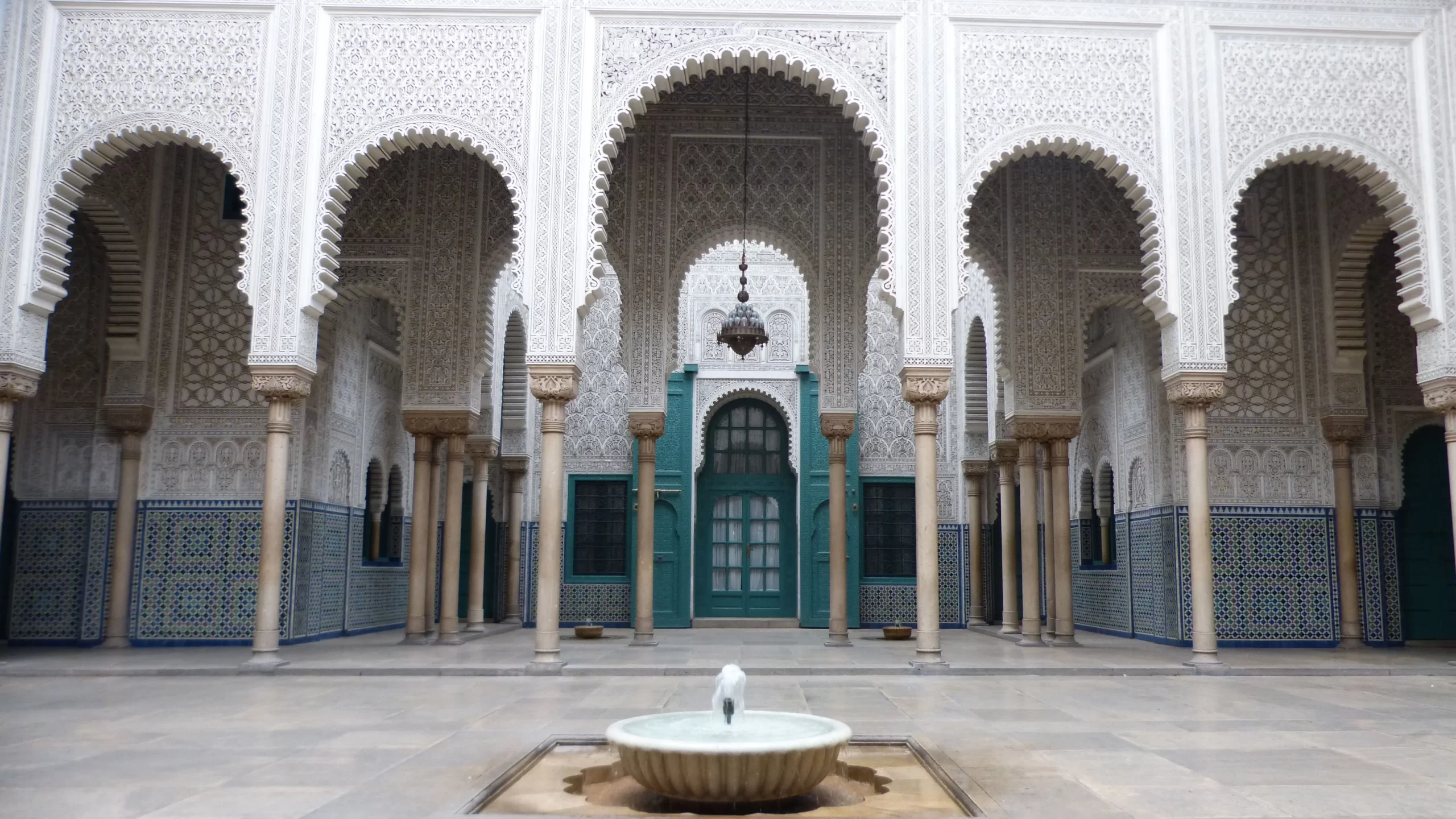
Casablanca's old walled quarter with narrow lanes, souks, and the nearby port gate, a contrast to the mosque's modern scale.
A seafront promenade lined with cafes and pools, popular for an evening stroll after visiting the mosque.
A mid-century Catholic church known for its modernist stained-glass windows designed by Gabriel Loire.
Central square anchoring Casablanca's colonial-era Ville Nouvelle district and government buildings.
A striped lighthouse on the coast near the mosque, offering skyline views back toward the Corniche.
A high-rise hotel in the city center with mosque-facing rooms available on higher floors.
An upscale hotel in the business district with easy tram access toward the Corniche.
The seafront neighborhood nearest the mosque, dense with mid-range hotels and beach clubs.
Simple riads and guesthouses inside the old medina within walking distance of the Corniche.
Join thousands of happy travelers who have discovered this incredible experience
Book Your Experience Now