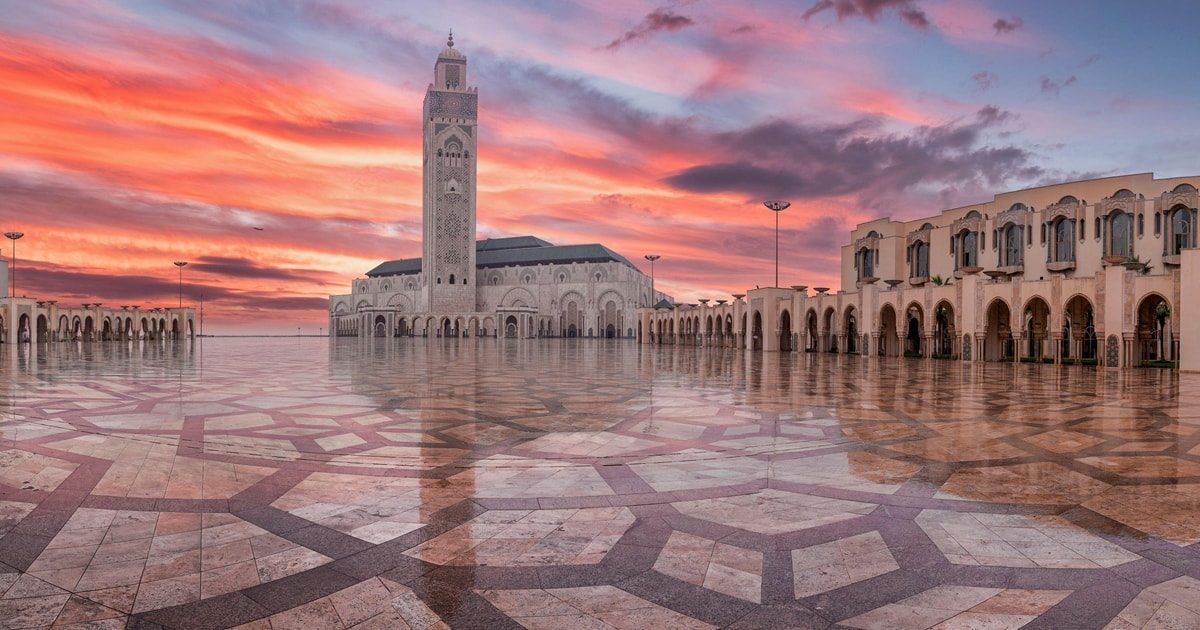
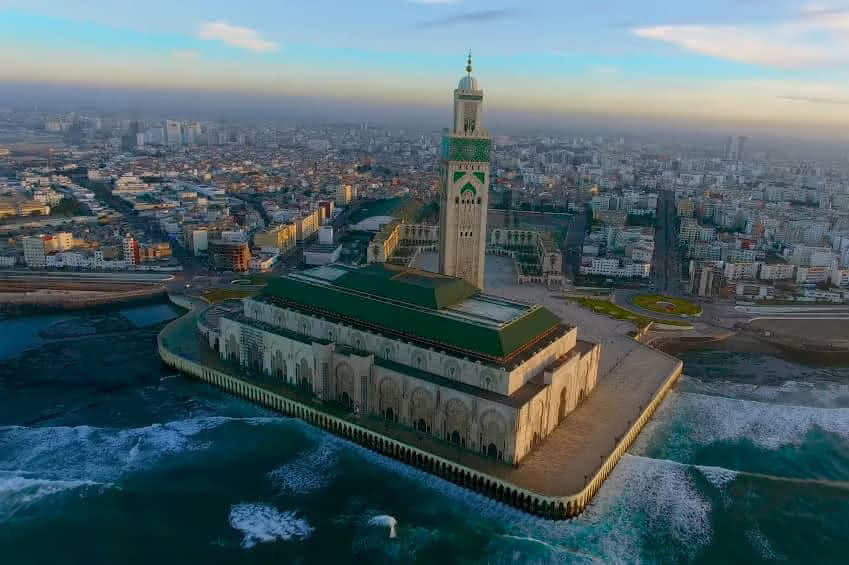
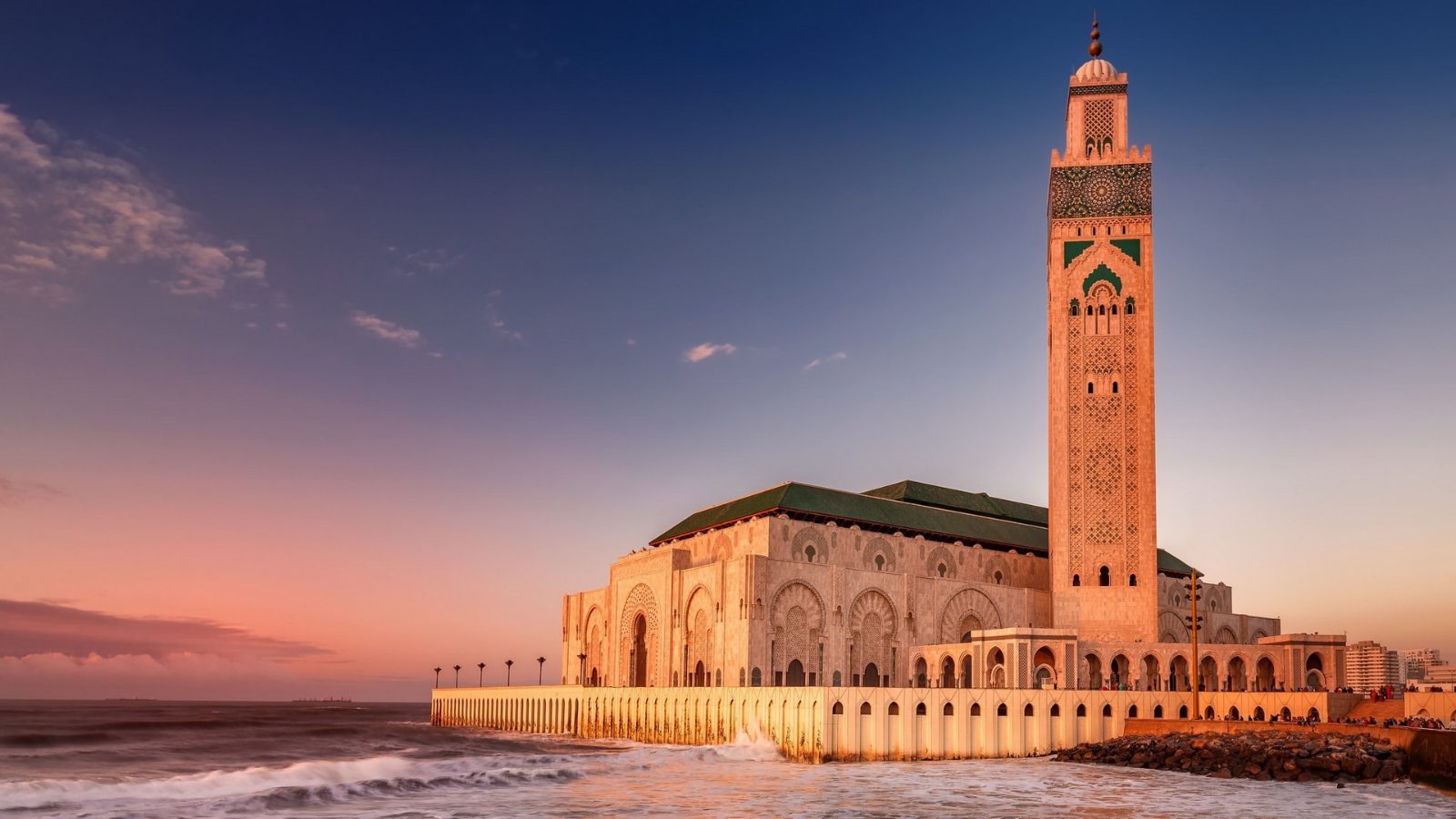
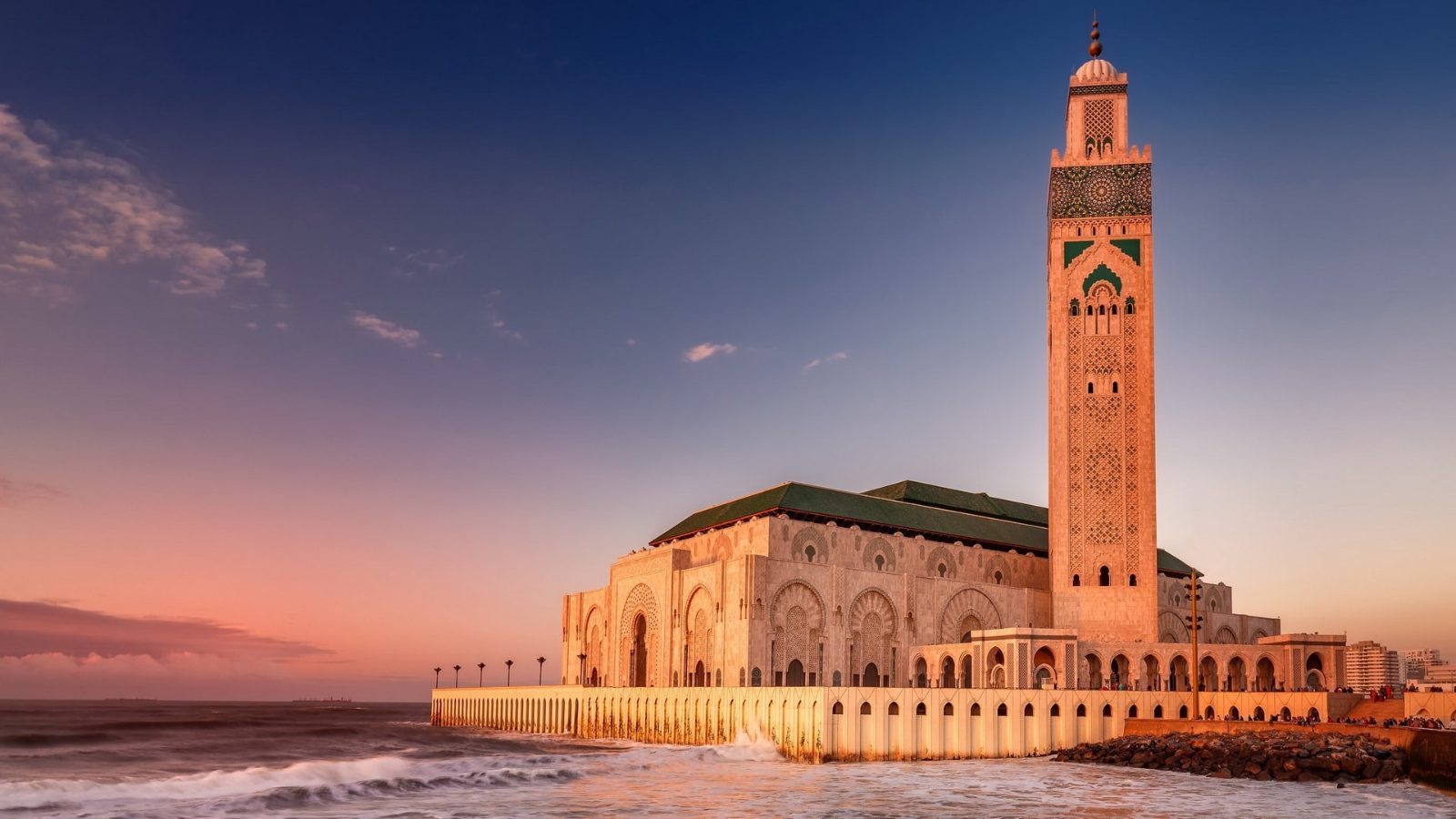
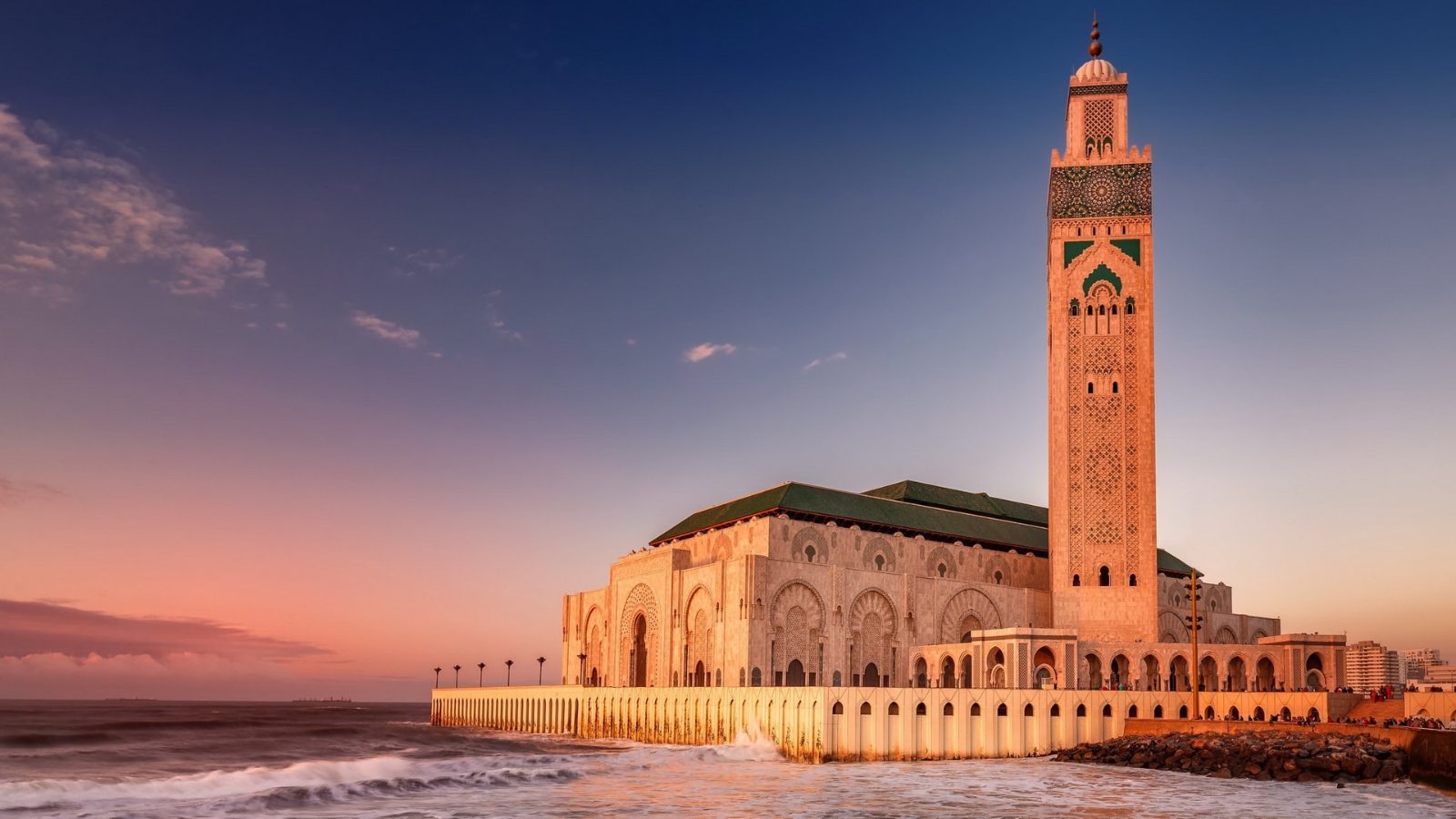
The Hassan II Mosque was built so that roughly a third of its footprint stands over the Atlantic, its foundations sunk into the seabed and its prayer hall floor laid above open water. Few landmarks anywhere are so literally anchored to the ocean. That decision explains a great deal about the city behind it.
Read moreShow less
Casablanca has always turned outward — toward shipping lanes, toward commerce, toward whatever was arriving next.
The modern city is largely a twentieth-century invention. Under the French Protectorate, architects and planners were given a small port town and effectively told to build a capital of trade, and they did so at speed, in the Mauresque idiom that fused Moorish geometry with Parisian Art Deco. The white facades around Place Mohammed V, the wrought-iron balconies of Boulevard Mohammed V, the old Marché Central — these are the residue of that boom. Behind them survives the Old Medina, smaller and plainer than its imperial counterparts, and beyond it the Habous quarter, a 1920s attempt to design a traditional Moroccan neighbourhood from scratch. Very little here pretends to be ancient. Almost everything here is honest about being new.
What defines Casablanca today is work. It is Morocco's financial engine, a city of offices, container cranes and evening traffic along the Corniche, and its landmark attractions fit together as a single legible arc rather than a scattered maze. Most casablanca tours run that arc: the mosque first, then the medina walls, the downtown Art Deco grid, the Habous, and finally the coast road toward Ain Diab. Hassan II Mosque guided tours anchor the itinerary because interior access is genuinely rare in Morocco. Casablanca private city tours suit travellers who want the same route at their own pace, while casablanca shore excursions and layover tours compress it for those with a fixed window. Longer options — Casablanca to Marrakech day trips, the Chefchaouen run, multi-day Sahara desert routes — treat the city as a departure point rather than a destination. Booking casablanca tours tickets in advance is common practice for the mosque in particular.
The destination suits the pragmatic traveller: someone curious about how Morocco actually functions, drawn to architecture, harissa-spiced street food, mint tea on a downtown terrace, and the sound of the Atlantic against a mosque wall. It rewards a day, sometimes two. A well-chosen casablanca tours tour covers the essentials without pretence, and a casablanca tours tours comparison usually comes down to pace rather than sights, since the city's highlights are few, large and unmistakable.
“Very little here pretends to be ancient — almost everything is honest about being new.”
Hassan II Mosque
One of the few mosques in Morocco open to non-Muslim visitors, built partly over the Atlantic with a 210-metre minaret.
Art Deco Downtown
The centre holds one of the densest concentrations of 1930s Mauresque and Art Deco architecture anywhere outside Europe.
Gateway To Morocco
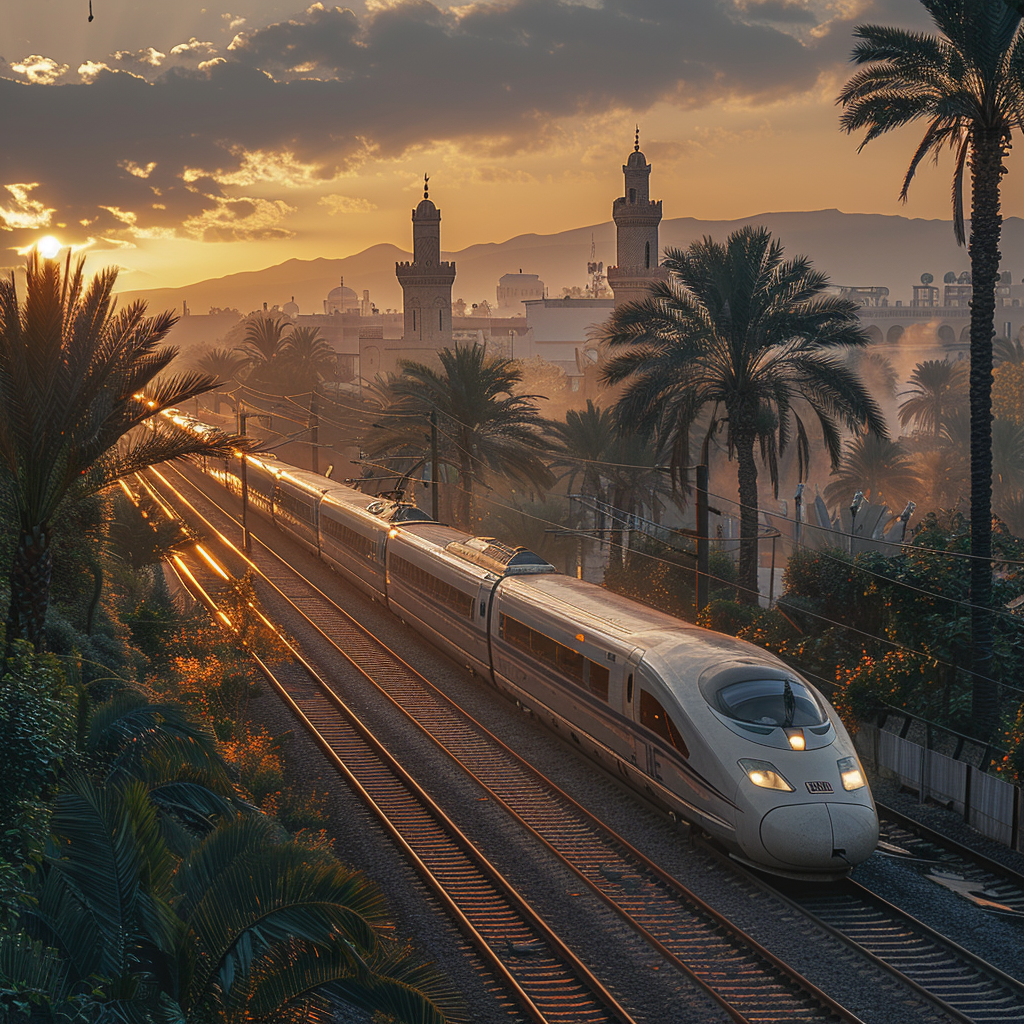
Fast rail and motorway links make the city a practical launch point for Marrakech, Rabat and the Sahara.
Most popular
Top attractions in Casablanca
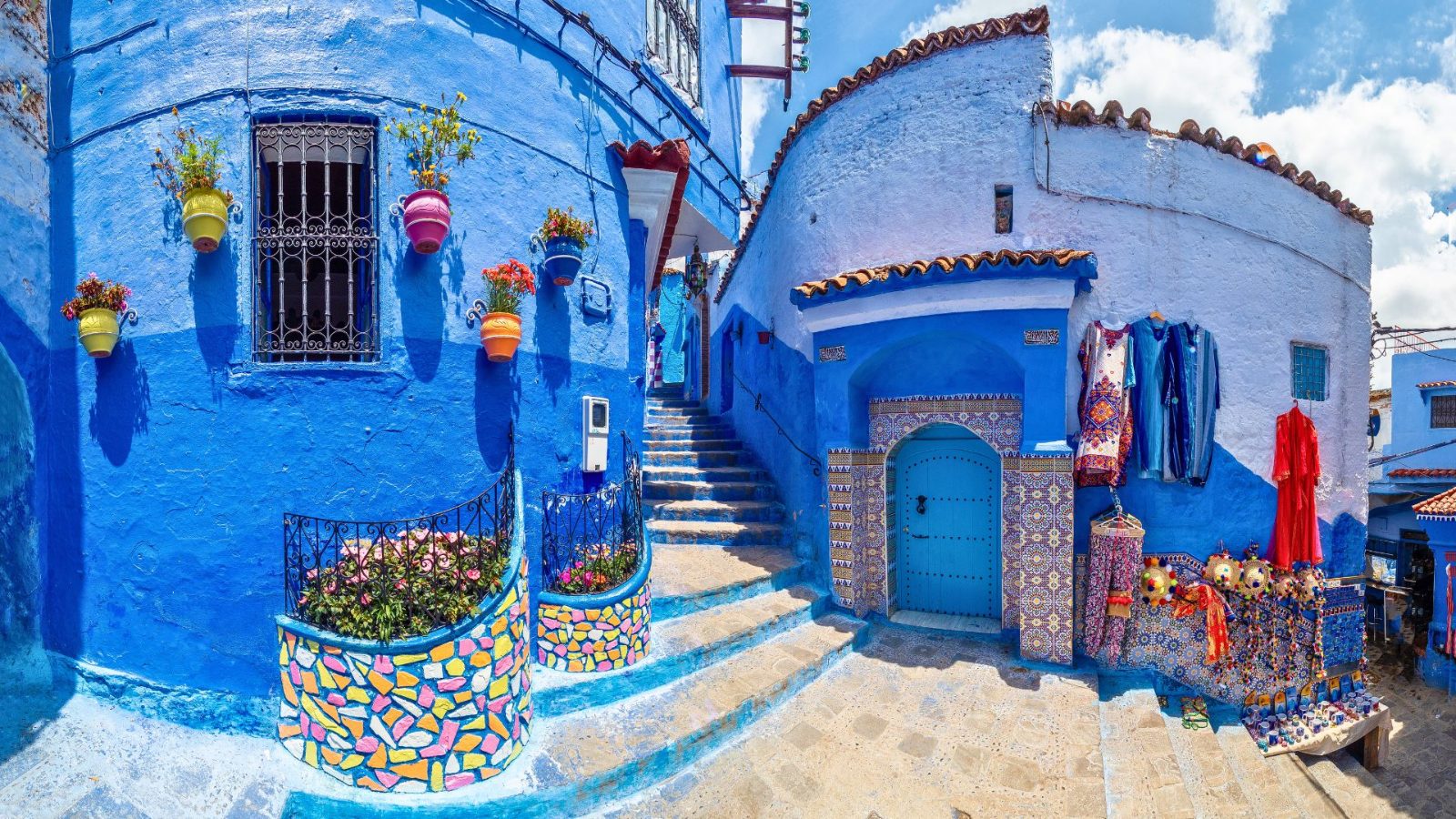
Casablanca works as both a destination and a launchpad, and these tours split roughly along that line. Some keep you in the city — the mosque on the Atlantic, the medina lanes, the late-night grill smoke. Others use the port and airport as a starting gun for Marrakech, the blue lanes of Chefchaouen, or dunes several days south. Choose by how much time you actually hold: a few hours between flights, one full day, or a week.
Casablanca Tours: 1-Day, 2-Day, and 3-Day Itineraries
Casablanca rewards a tight plan more than a long list. One day covers the Hassan II Mosque and the old medina on foot; a second day adds Quartier Habous and the Corniche; a third opens the city up to a full-day trip north or south. Each plan below builds on the one before it, so you can stop wherever your time runs out.
Book the first English-language slot to see the prayer hall and the underground ablution chamber before the queues build; allow 90 minutes including the terrace outside. Shoulders and knees covered, shoes come off at the door.
Walk the ten minutes east from the mosque and enter through Bab Marrakech, looping past the spice and textile lanes. Roughly an hour on foot; keep small notes handy for the stalls.
Cut south from the medina into the arcaded downtown for the 1920s facades and the covered central market. Two hours at a slow pace, with the tram line running alongside if you want to shortcut.
Round off near the harbour with a drink and live piano at the film-inspired bar, or skip it for a straightforward seafood dinner nearby. Reserve ahead if you want a table rather than the bar.
Start in the 1930s new medina for its bakeries, olive stalls and bookshops arranged around calm arcades. Ninety minutes is enough; the Mahkama du Pacha courthouse sits at the northern edge if it happens to be open.
2
Midday
Royal Palace exterior and Habous gardens
A short walk from the arcades brings you to the palace gates and the gardens facing them. Twenty minutes and a photo stop only, since the interior is closed to visitors.
3
Afternoon
Corniche at Ain Diab
Take a petit taxi west and walk the seafront promenade from the lighthouse toward the beach clubs. Two hours, and the far end is the better swimming stretch if you have brought a towel.
4
Evening
Marabout of Sidi Abderrahmane at sunset
End at the whitewashed shrine on its tidal rock at the Corniche's western tip. Fifteen minutes from the shore; check the tide, as the causeway floods.
Pick one long day out: the mountain lanes of Chefchaouen or the souks and Koutoubia of Marrakech. Both leave before dawn and run past dark, so pack for a full day in the vehicle.
If you would rather trade the drive north for the drive south, the Marrakech run swaps mountain lanes for Jemaa el-Fnaa and the Bahia Palace. Same early start, same late return.
El Jadida, Rabat and Azemmour all sit within a comfortable half-day if a fourteen-hour round trip is too much. Useful when a cruise call or a connecting flight caps your window.
Keep the last night light with a walk along Boulevard d'Anfa or a late tagine near your hotel. Tram service runs until roughly 22:00 if you are staying beyond the centre.
Where to go
Casablanca Neighborhoods: Where Casablanca Tours Actually Take You
Casablanca sprawls along the Atlantic rather than clustering around one obvious core, so tour routes tend to link a handful of set-piece districts rather than a single walkable center. The Old Medina and Habous anchor the historic and shopping side of any itinerary, the Corniche at Ain Diab covers beach and evening life, and the newer grid of Gauthier, Maarif, and Anfa is where the city's day-to-day rhythm and business character show through.
Old Medina
Best for: First-timers · quick history stop
Casablanca's original 18th-century walled town, smaller and less polished than Fez or Marrakech's medinas, with whitewashed lanes running past the Sqala bastion on the old port wall. It suits visitors who want a quick, contained dose of pre-colonial Casablanca between the port and the Hassan II Mosque.
Habous Quarter
Best for: Shopping · souks
A planned "new medina" built by French architects in the 1920s-30s, with arcaded streets, fixed prices, and souks selling leather, ceramics, and spices in a calmer setting than the Old Medina. It works well for travelers who want souvenir shopping and Moroccan architecture without the pressure tactics of larger medinas.
Ain Diab (La Corniche)
Best for: Beach · nightlife
A 3km beachfront strip of clubs privés, seafood terraces, and promenade views toward the Hassan II Mosque, quiet by day and the city's main nightlife draw after dark. It's the district for travelers who want a beach afternoon or an evening out rather than another historic sight.
Gauthier
Best for: Cafes · design shops
A compact, tree-lined quarter near the Twin Center known for art galleries, specialty cafes, and a younger, design-conscious crowd. It appeals to visitors who want a walkable, creative pocket of the city rather than a landmark checklist.
Maarif
Best for: Local life · shopping
The dense commercial grid built around Maarif roundabout, where Casablancans themselves shop and socialize among bakeries, boutiques, and street-level dining. It's the district for travelers who want the city's everyday urban life rather than a tourist strip.
Anfa
Best for: Quiet · upscale residential
A hillside residential district of villas, Art Deco holdovers, and green space, including the old racetrack and a small golf course, set apart from the coast and downtown bustle. It suits visitors seeking a quiet, upscale look at the city between stops elsewhere.
Getting around
Getting Around on Your Casablanca Tour
Casablanca spreads out more than Morocco's medina cities, but a four-line tram network, red petit taxis, and a direct airport train cover most of what visitors need. Distances between the medina, Habous, and the corniche mean you'll combine walking with at least one of these options most days.
Tram
8 MAD flat fare
Casa Tramway, run by RATP Dev Casablanca, covers four lines (T1 Sidi Moumen–Lissasfa, T2 Sidi Bernoussi–Aïn Diab, T3 Casa-Port–Hay Al Wahda, T4 Arab League Park–Mohammed Erradi) with free transfers between them. T3 is the most useful line for sightseeing since it starts at Casa-Port station near the medina and Hassan II Mosque area.
Taxi
~2-3 MAD/km, 20-30 MAD city hop
Red petit taxis are metered, hold up to three passengers, and work well for short hops around town; ask the driver to run the meter ("le compteur, s'il vous plaît") rather than negotiate. White grand taxis handle longer routes and the airport run on a regulated fare rather than a meter.
Ride-hailing
fare shown in-app
Careem is the most reliable app-based option in Casablanca and shows fares upfront before you book. inDrive is a useful backup where you propose a price directly to the driver; Uber does not currently operate in Morocco.
Walking
free
The medina, Habous quarter, and Corniche are each walkable once you're inside them, but the distances between neighborhoods are too long to cover on foot. Pair walking within a district with a tram or taxi ride to get between them.
From the airport: From Mohammed V International Airport (CMN), the ONCF Al Bidaoui train runs to Casa-Voyageurs station in 30-45 minutes for 50 MAD second class, making it the fastest option for layover or shore-excursion visitors on a tight schedule. A regulated grand taxi covers the same route in 35-50 minutes for 250-300 MAD to the city centre.
Costs
How Much Do Casablanca Tours Cost?
Casablanca runs cheaper than Marrakech or Fes for guided experiences, since it is less tourist-saturated, but paid entries and private tours still add up fast next to the city's low street-level prices.
Free-sight day (Old Medina, Corniche, exterior of Hassan II Mosque)meals and petit taxis only
0-100 MAD
Hassan II Mosque guided tour, foreign adultmandatory for non-Muslims, ~1 hour
120-140 MAD
Half-day private city tour, per persondriver-guide, air-conditioned car
550-650 MAD (about 60 USD)
Full-day private tour, per person (2 pax)Mosque, Medina, Habous, Corniche
1,000-1,300 MAD
Mid-range sit-down mealmain course, no drinks
80-150 MAD
Mint teastreet cafes and medina stalls
10-15 MAD
3-day Sahara add-on from Casablanca, per personshared transport, 2 nights, meals included
3,200-3,600 MAD (roughly 320-360 USD)
Daily budget: A realistic daily budget lands around 300-450 MAD per person sticking to free sights and one paid mosque tour, versus 700-1,000+ MAD on a day with a private guided tour factored in.
Beyond the city
Best Day Trips from Casablanca Tours
Casablanca sits within easy rail and road reach of several distinct Morocco experiences, from imperial cities to coastal towns, though not every popular destination fits into a single day. Below is a quick-reference roundup; see the linked sub-pages for full itineraries and pricing.
Rabat
1 hr
train from Casa-Voyageurs
Morocco's capital pairs the Hassan Tower and Kasbah of the Oudayas with a compact, walkable center, making it the easiest true day trip on this list.
El Jadida
1.5 hr
train or CTM bus from Casa-Voyageurs
A former Portuguese trading post with a fortified old town and cistern, offering a quieter coastal alternative to Casablanca itself.
Marrakech
2.5-3 hr each way
direct ONCF train from Casa Voyageurs
Feasible as a long day trip given frequent departures, though an overnight stay suits the medina and souks better; full guide linked separately.
Chefchaouen
5-6 hr each way
CTM bus or private transfer, often via Tangier or Fez
The blue-washed mountain town is best treated as a multi-day trip rather than a same-day return; see the dedicated day-trips guide for routing options.
Sahara Desert (Merzouga/Zagora)
9+ hr each way
multi-day tour departing Marrakech or Fez
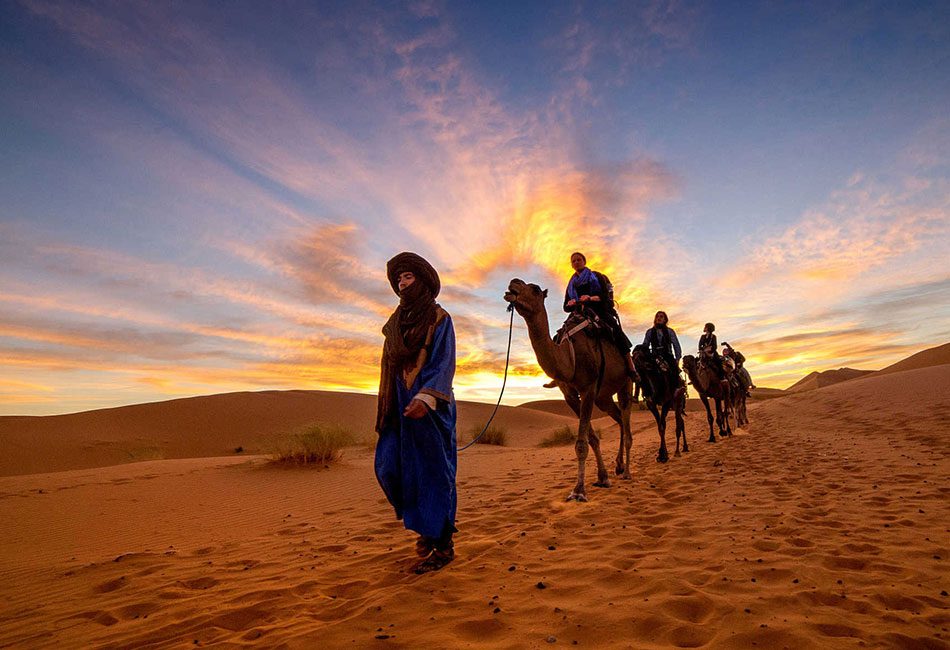
Not reachable in a single day from Casablanca; covered in the multi-day desert tours guide for travelers planning a longer add-on.
Food & drink
What to Eat Between Casablanca Tours
Casablanca's food scene runs from harborside seafood stalls to coastal fine dining, and pairing meals with tour stops is easy since the city's culinary landmarks sit close to its main sights. A day of sightseeing here naturally breaks into a seafood lunch, a bakery stop, and a modern dinner by the ocean.
Central Market (Marché Central)
€
market
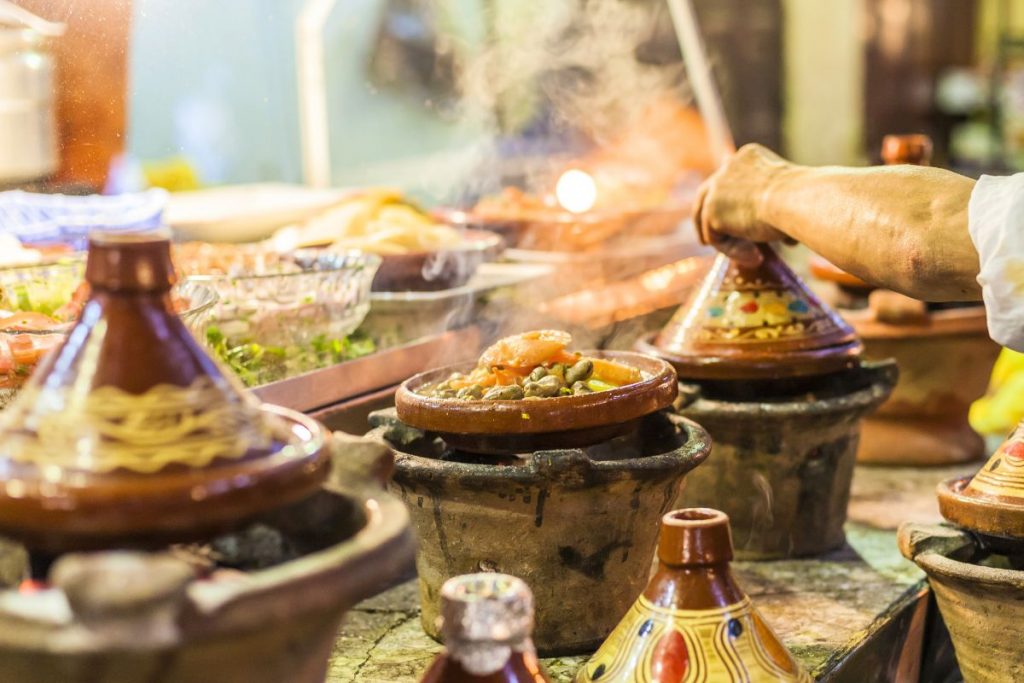
A covered market on Boulevard Mohammed V downtown where vendors sell fresh oysters, sardines, and swordfish that nearby stalls grill on the spot; pair it with a walk through the surrounding art deco district.
Pâtisserie Bennis Habous
€
venue
A family-run bakery operating since 1930 in Quartier Habous, known for almond-paste cornes de gazelle and honey-soaked chebakia, best visited alongside the neighborhood's mosque and souk stops.
Mint tea in Habous
€
dish
Poured from a height in the quarter's small tea houses and cafes bordering the souk, traditionally taken alongside a plate of pastries after browsing the Habous shops.
Gauthier dining strip
€€
street
A dense run of bistros and upscale Moroccan restaurants near the city center, favored for a sit-down lunch or dinner between downtown sightseeing stops.
Corniche and Ain Diab seafront
€€-€€€
district
Restaurants and beach clubs facing the Atlantic near Hassan II Mosque, serving fresh fish and modern Moroccan menus, well suited to an evening stop after visiting the mosque.
Maarif
€
district
A more local, everyday dining area with casual Moroccan counters and varied international spots, useful for an affordable meal between city excursions.
The story
The History Behind Casablanca Tours
Casablanca began as Anfa, a Berber port razed by Portuguese forces in 1468 and rebuilt by them in 1515. Sultan Sidi Mohammed ben Abdallah repopulated the site in 1770, naming it Dar el-Beida. Spanish merchants rendered that as Casa Blanca. The city remained modest until French troops landed in 1907. Under the Protectorate declared in 1912, Resident-General Hubert Lyautey commissioned architect Henri Prost to draft a master plan in 1914. Prost ringed the medina with wide boulevards and set administrative buildings around what is now Place Mohammed V. Marius Boyer, Auguste Perret and others filled those blocks between 1918 and 1940 with Art Deco facades fused to Moorish plasterwork and zellij, a hybrid later called Mauresque. Many casablanca tours begin at these facades rather than at any single monument.
On 14 January 1943, Roosevelt and Churchill met at the Anfa Hotel for ten days, issuing the unconditional surrender doctrine and inviting Sultan Mohammed V, whose presence sharpened Moroccan independence demands granted in 1956. A casablanca tours tour of the Habous quarter, built from 1918 as a planned new medina, shows the same colonial logic applied to housing.
Hassan II ordered the mosque bearing his name in 1980; Michel Pinseau designed it, 10,000 craftsmen worked the cedar and marble, and it opened on 30 August 1993 with a 210-metre minaret standing over the Atlantic. Guided casablanca tours tours and casablanca tours tickets reach its prayer hall, one of few Moroccan mosques admitting non-Muslims. Casablanca landmarks survive in the Cathedral of the Sacred Heart, the Wilaya clock tower and the Villa des Arts.
1468
Portuguese forces destroy the Berber port of Anfa.
1515
The Portuguese rebuild the site and name it Casa Branca.
1770
Sultan Sidi Mohammed ben Abdallah refounds the town as Dar el-Beida.
1912
The French Protectorate is declared and Lyautey makes Casablanca its economic capital.
1914
Henri Prost delivers the master plan that shapes the Art Deco city centre.
1943
Roosevelt and Churchill hold the Casablanca Conference at the Anfa Hotel from 14 January.
1956
Morocco regains independence under Mohammed V.
1993
The Hassan II Mosque opens on 30 August with a 210-metre minaret.
FAQ
Casablanca — frequently asked questions
Casablanca offers a fascinating mix of stunning architectural wonders like the Hassan II Mosque, vibrant traditional souks, beautiful coastal corniches, and historic Art Deco buildings scattered throughout the downtown area.
Consider your interests: architecture lovers should focus on the downtown Art Deco district and the Grand Mosque, history buffs will enjoy the Old Medina, while families might prefer the Morocco Mall or a relaxing walk along the Ain Diab Corniche.
Spring (March to May) and autumn (September to November) offer the most pleasant weather for exploring outdoor sites. Morning visits are ideal for landmarks like the Hassan II Mosque to catch the best lighting and avoid the midday heat.
Booking your tickets or guided tours online in advance is highly recommended. It secures your preferred entry time, helps you bypass long ticketing queues at major landmarks, and often allows you to take advantage of exclusive online discounts.
Many major sites, including the grand plazas, modern malls, and parts of the Hassan II Mosque, are wheelchair accessible and great for families. However, older areas like the Old Medina have narrow, uneven streets that can be challenging to navigate with strollers or wheelchairs.
The Casablanca tramway is an efficient, safe, and clean way to reach major tourist spots. Alternatively, you can use the local red 'petit taxis' for quick and affordable trips between locations that are not directly covered by the tram network.
While Casablanca doesn't feature a single universal city pass like some European capitals, many local tour operators offer combined half-day or full-day guided tours that bundle visits to the Hassan II Mosque, the Medina, and the Corniche at a discounted overall rate.
To avoid large tour bus groups, start your day early, especially when visiting the Hassan II Mosque or the Royal Palace gates. Mid-week visits tend to be much quieter than weekends, and taking private walking tours can help you navigate busy areas with ease.
Ready to Explore?
Choose from amazing attractions and create unforgettable memories in this beautiful city