
English| EUR
Suggested for you
More currencies
Book Now
Open today · 00:00 – 23:59

Casablanca To Chefchaouen Tour

Casablanca To Chefchaouen Tour — Blue City Day Trips & Reserved Seats

Indigo walls at first light, cedar slopes by afternoon.

241K+ travelers chose this
Free Cancellation
Right now: Moderate — summer day-trip season Midday Rif Mountain sun is strong; plan the blue-wall walk before 14:00
14-16 hours round trip
1 Languages
Private or up to 15
Free Cancellation
Free cancellation Instant confirmation Mobile voucher Verified partner Book now, pay later
Choose your ticket

Ticket options at a glance

Compare fares, pick the fit — all bookings are mobile-voucher and eligible for free cancellation where shown.

Chefchaouen Blue City Expedition: High-Speed Rail Escape from Casablanca 14 hr
Guided Experience

Chefchaouen Blue City Expedition: High-Speed Rail Escape from Casablanca

4.5 (70)
€249
  • Expert local guide
  • Small group
  • Skip-the-line access
  • Free cancellation
Book this ticket
Full-Day Chefchaouen Excursion from Casablanca 24 hr
Guided Experience

Full-Day Chefchaouen Excursion from Casablanca

5 (4)
€230
  • Expert local guide
  • Small group
  • Skip-the-line access
  • Free cancellation
Book this ticket

Is it worth it?

Worth it overnight, hard to justify as day trip

A casablanca to chefchaouen tour sells you roughly eleven hours of Rif Mountains road for perhaps four hours on the ground. The town itself charges nothing — 0 MAD, no entrance fee, open access, with the day tour priced separately — so every dirham you hand over buys transport, a driver and a guide, not admission. That math matters. If you land inside the 09:00–14:00 window, you get the blue-washed medina under good light, cooler air, and the lime-indigo lanes climbing toward Ras el-Maa before the coach crowds thicken. Solo travellers without a car, or anyone nervous about Moroccan mountain driving, get real value from casablanca to chefchaouen tour tickets. Independent drivers and slow travellers do not: the same money covers a night in a riad, and the town rewards evening and dawn far more than a rushed midday hour. Choose by pace, not price.

What makes it worth it

  • Town entry free, 0 MAD, no ticket needed
  • Driver handles long Rif Mountains route
  • Arrival often lands in ideal 09:00–14:00 light
  • No car rental or navigation stress
  • Guides unlock medina lanes you would miss

Keep in mind

  • Ten to twelve hours mostly in transit
  • Only three to four hours in Chefchaouen
  • Midday medina crowds thicken along main lanes
  • Meals and tips usually cost extra

Bottom line: Book the casablanca to chefchaouen tour tour if you cannot drive and accept a long day; otherwise skip the coach and sleep one night in the blue town instead.

Head to head

Casablanca to Chefchaouen Tour vs Multi-Day Fes and Chefchaouen Tour

For most travelers, a single-day casablanca to chefchaouen tour wins on efficiency, while the 3-day Fes and Chefchaouen loop wins on depth if you can spare the extra nights. Both hit the blue medina, but they trade fatigue for breadth in opposite directions.

Top pick
Casablanca to Chefchaouen Day Tour
Multi-Day Casablanca to Fes & Chefchaouen Tour
Total trip length
2–3 nights, 3–4 days total 3–4 hours, one afternoon
Roughly one half-day plus overnight 5–6 hours each way, same day
Split over 2–3 days, less daily strain None — direct there and back
Rabat, Assilah, Volubilis, Fes medina None, returns to Casablanca same night
1–2 nights in Riads (Chefchaouen, Fes) Priced separately per day tour booking
$500–$900+ per person (twin-share) Time-limited visitors wanting a quick blue-city glimpse

Verdict: Choose the casablanca to chefchaouen tour tour for a single free day in Casablanca, and the multi-day Fes tour tours package if Fes's medina and Volubilis's Roman ruins matter as much as the blue-washed streets.

Featured Experiences

Popular tours & activities

Hand-picked experiences loved by thousands of travelers

Recommended Experience

Powered by GetYourGuide

Another traveler favorite

Powered by GetYourGuide
4-Day Private Moroccan Highlights: Casablanca, Rabat & Chefchaouen 4 days Free Cancellation

4-Day Private Moroccan Highlights: Casablanca, Rabat & Chefchaouen

Discover Morocco’s iconic cities on this private 4-day guided tour featuring Rabat’s history and the stunning blue streets of Chefchaouen.

4.6
FromFrom €280.73
See details
2-Day Casablanca to Tangier & Chefchaouen Rail Adventure 2 days

2-Day Casablanca to Tangier & Chefchaouen Rail Adventure

Experience Morocco's northern gems on a high-speed train journey from Casablanca. Discover history and blue-washed streets.

4.4 (27)
FromFrom €249
See details
4-Day Private Morocco Grand Tour: Casablanca to Marrakech 4 days Free Cancellation

4-Day Private Morocco Grand Tour: Casablanca to Marrakech

Experience Morocco's cultural depth on a private journey from Casablanca through Chefchaouen to Marrakech.

5 (1)
FromFrom €562.63
See details
Your journey

Step-by-step — what your day looks like

1

Early departure from Casablanca

Pickup by air-conditioned vehicle for the 5 to 6 hour drive north to Chefchaouen

2

Arrival and medina walk

Enter through Bab El-Ain into Plaza Uta el-Hammam and wander the blue-washed alleys during the best morning light

3

Kasbah Museum visit

Explore the 15th-century red-walled fortress and its rooftop garden overlooking the blue rooftops

4

Free time for shopping and lunch

Browse textile and ceramic souks around the square, then eat at a medina café

5

Optional Spanish Mosque viewpoint

Short uphill walk from the medina edge for a panoramic view over the blue town

6

Return drive to Casablanca

Board the vehicle for the drive back, arriving in Casablanca in the evening

What you'll see

Highlights not to miss

Plaza Uta el-Hammam

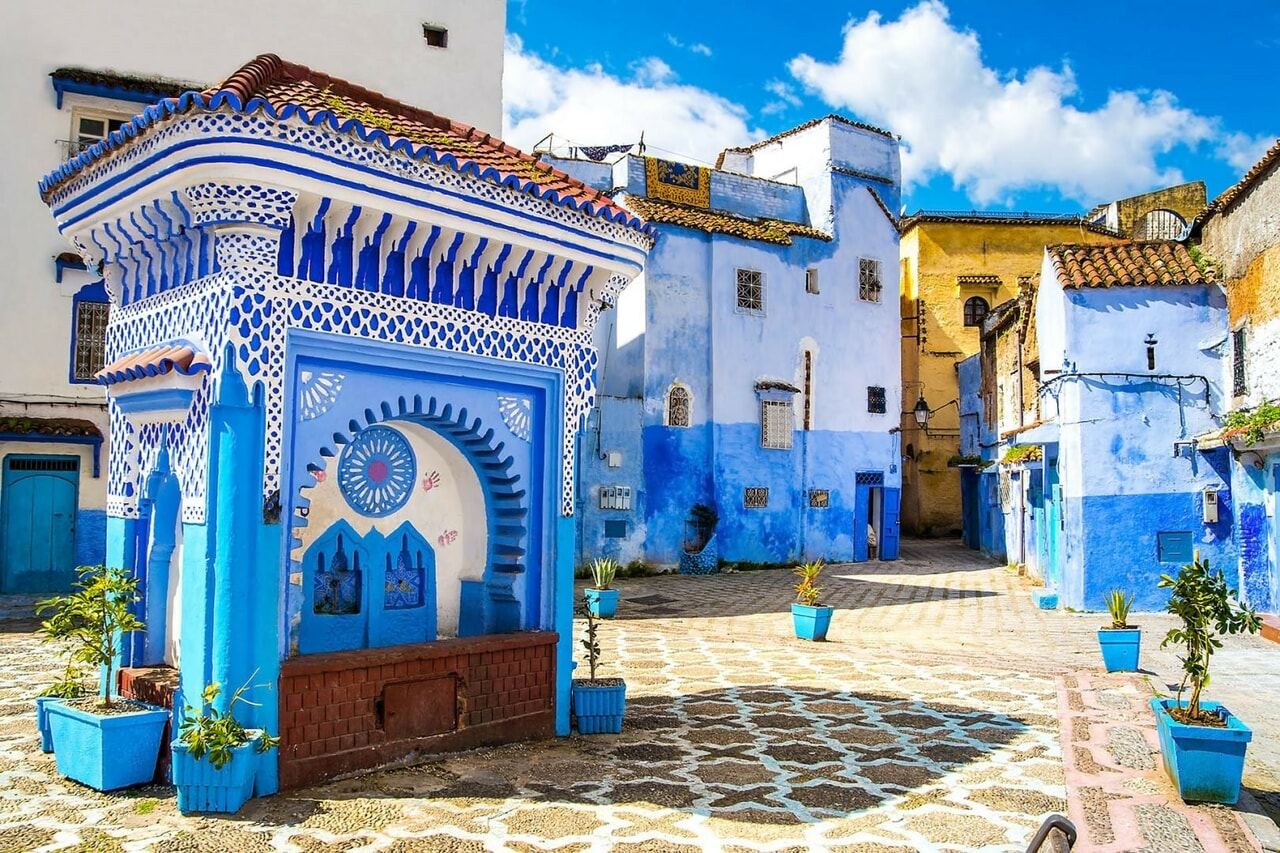
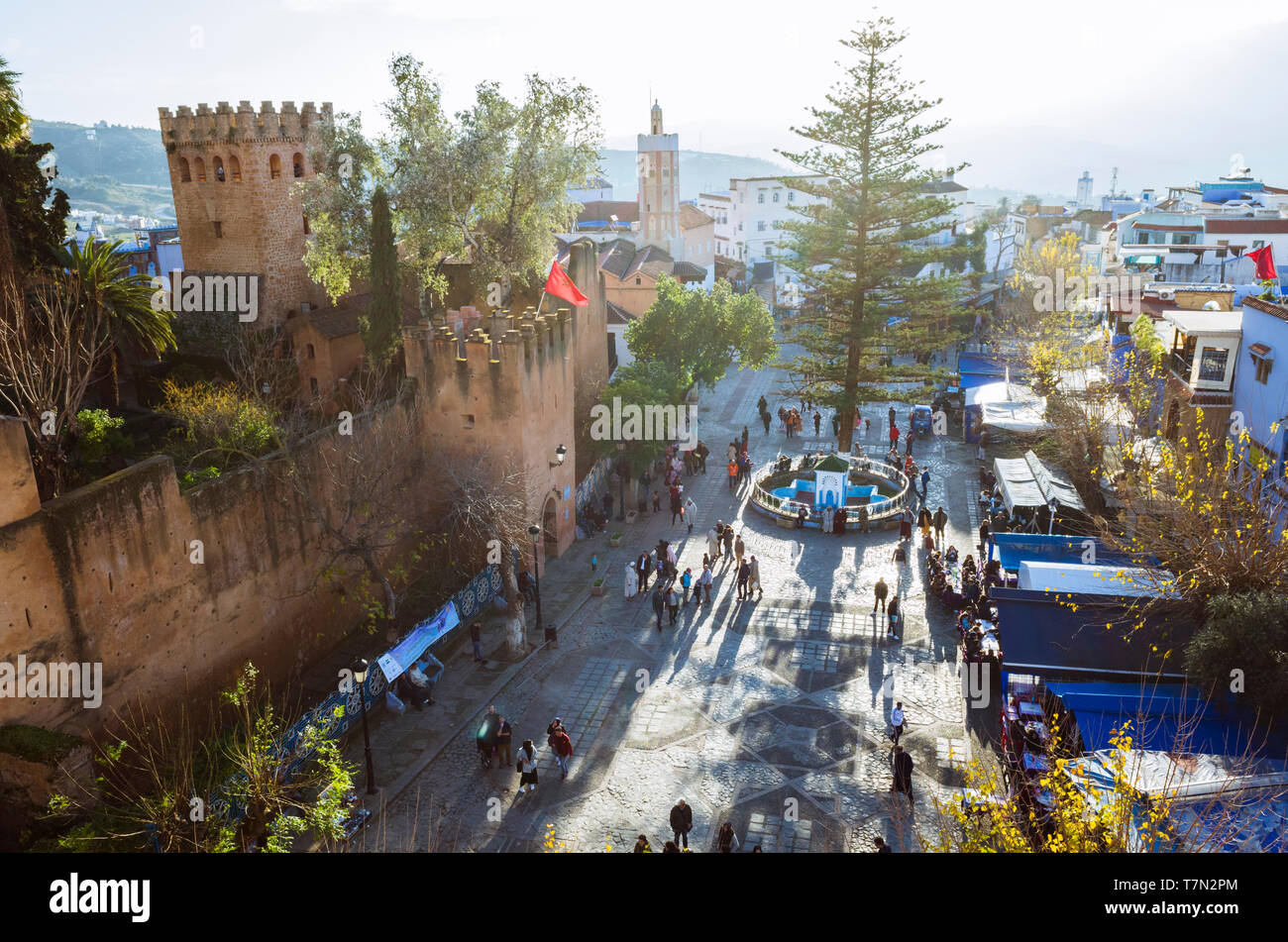
The medina's central square, shaded by orange trees and lined with café terraces, sits directly beside the 15th-century Kasbah and the Grand Mosque. It becomes the social heart of Chefchaouen again after dark once day-trip crowds thin out.

Kasbah Museum

Built in 1471 by Moulay Ali Ben Rashid as a defensive fortress, this terracotta-red structure is the one deliberate exception to the town's all-blue palette. Its rooftop terrace and tower offer an elevated view across the blue rooftops toward the Rif Mountains.

Grand Mosque

Built in 1560 by Moulay Mohamed, son of the town's founder, its octagonal minaret with three tiers of blind arches was added later in the 18th century, inspired by Seville's Torre de Oro. Non-Muslims cannot enter but can view the unusual tower from the square.

Spanish Mosque

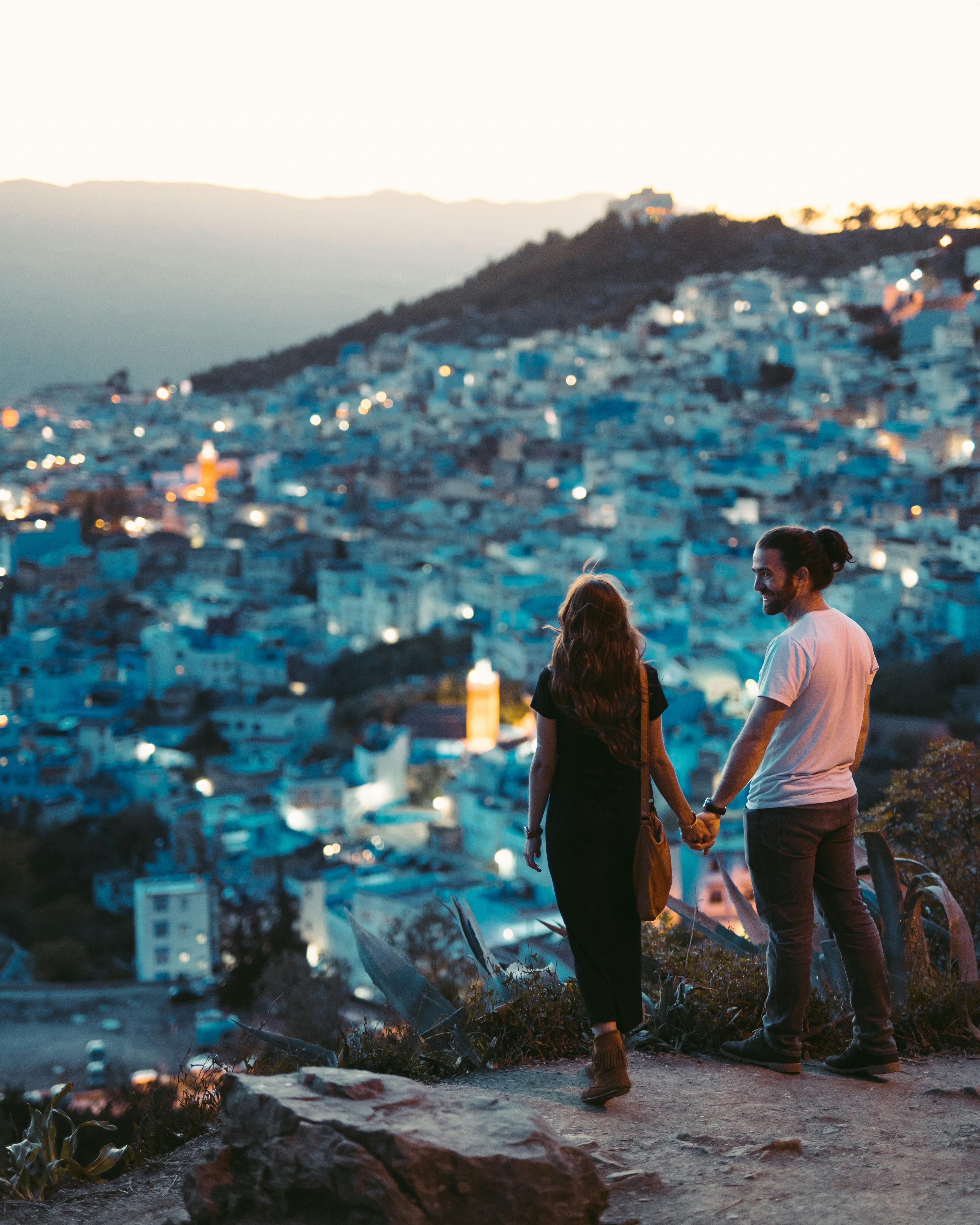
An unfinished mosque built by Spanish colonial authorities in the 1920s and never used for worship, it sits on a hilltop reached by a 20 to 25 minute uphill walk from Bab El-Ain. Its terrace delivers the single best panoramic shot of the blue town against the Rif ridgelines.

Ras El Maa waterfall

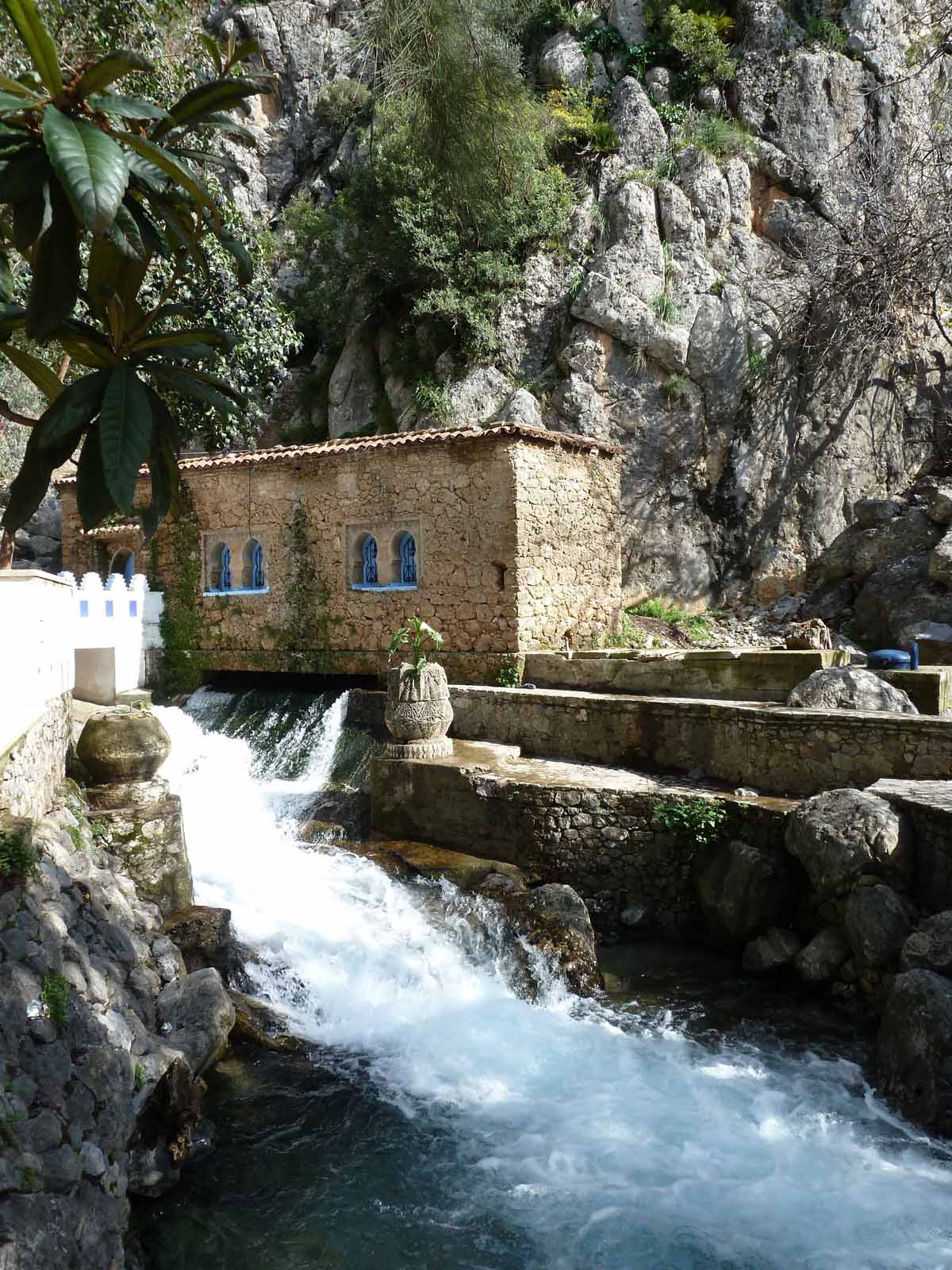
A small spring-fed cascade just outside the medina's northeast gate, where the Oued Ras el-Maa stream tumbles down from the Rif Mountains. Local women still wash wool and laundry on the flat rocks here, a practice largely unchanged for generations.

Upper Medina blue staircases

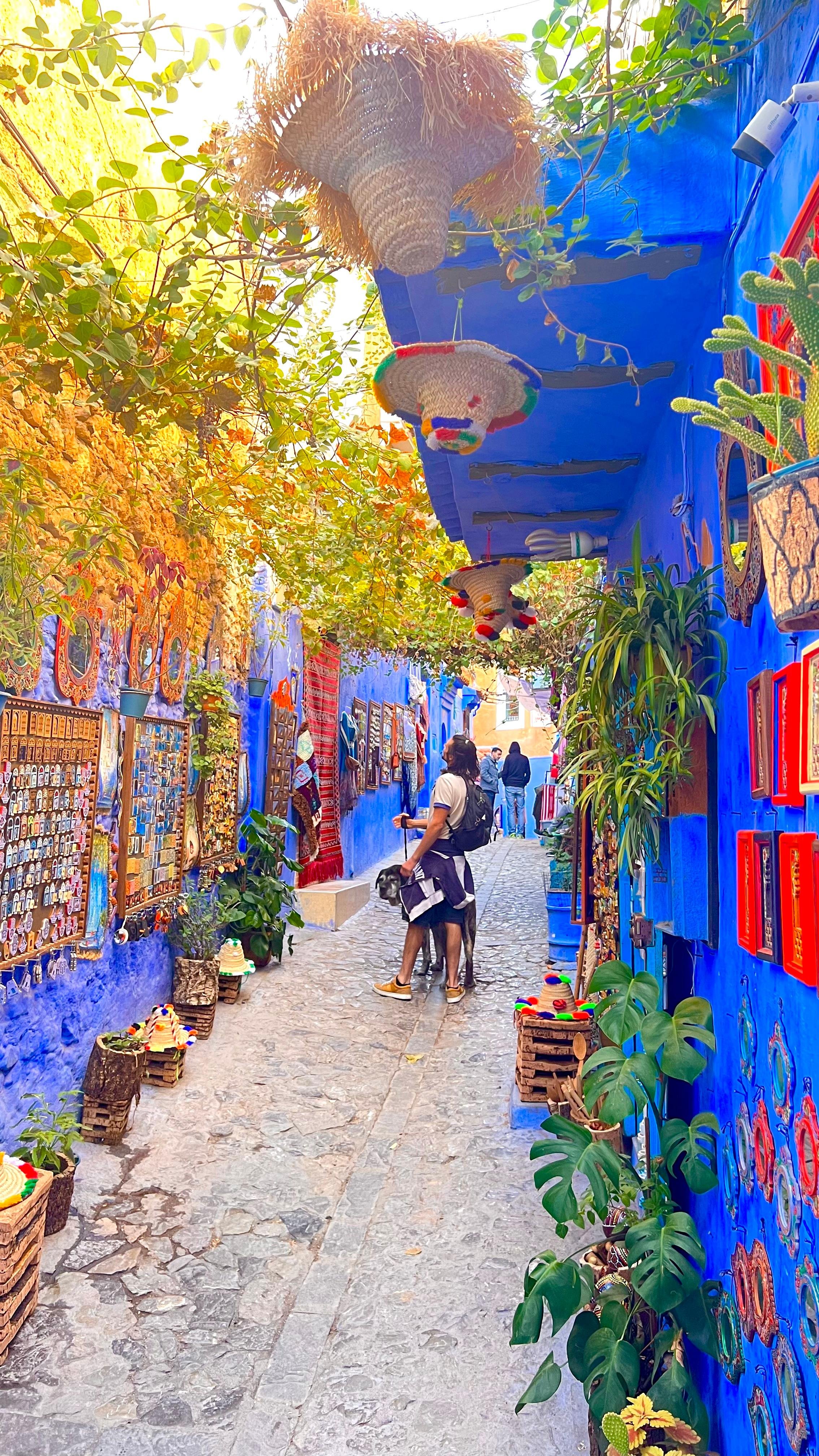
The steep, stepped alleys above the Kasbah, concentrated around Rue Sidi el-Haj Aissa, hold the deepest and most saturated blue of any quarter in town. This residential section sees far fewer shops and tourists than the lower medina near Bab El-Ain.

The experience

What the visit is really like

You leave Casablanca before dawn, and for the first two hours the window shows only Atlantic plain — flat, agricultural, unremarkable. Somewhere past Ouezzane the road begins to climb, cork oak replaces wheat, and the temperature drops several degrees. You feel the switchbacks before you see the town. You arrive inside the 09:00–14:00 window, when the light is still low enough to read the texture of the walls. Your driver stops below Bab el Ain, the western gate, because vehicles go no further. You walk in. The first lane rises; almost every lane here rises. You pass a weaver's doorway, a stack of dyed wool, a cat asleep on a step painted three shades of blue. You reach Place Outa el Hammam and stop for mint tea under the Kasbah wall. Later you climb east, following the water, to Ras el Maa — the spring where women still rinse laundry against stone slabs and the mountain air arrives cold off the ridge. From here the medina reads as a single indigo mass below you. On the descent you buy goat's cheese, or wool, or nothing. There is no entrance fee to pay; the town costs nothing to walk. Then you rejoin the vehicle at the gate for the long return leg of your casablanca to chefchaouen tour, most of it in darkness.

Everything You Need to Know

Your complete experience guide

All the details about your upcoming adventure in one place

Casablanca to Chefchaouen Tour: The Blue City

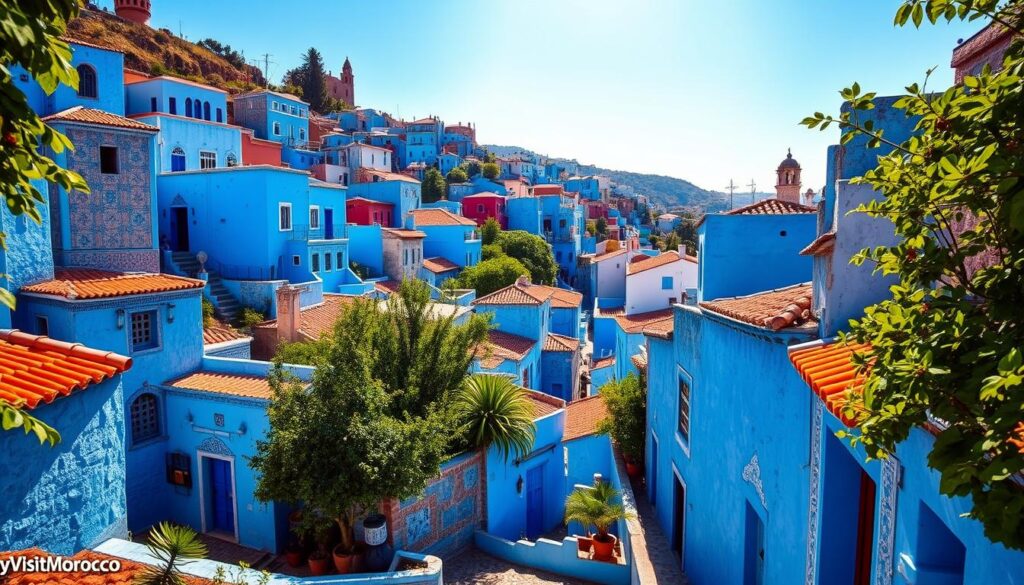
This casablanca to chefchaouen tour crosses roughly 550 kilometres of Atlantic coastline and Rif Mountain foothills to reach the indigo-washed medina founded in 1471. Travellers wander the lime-blue alleys around Plaza Uta el-Hammam, photograph the red-walled Kasbah, and browse woollen djellabas and goat cheese from the surrounding Jebala villages. Most casablanca to chefchaouen tour tickets bundle air-conditioned transport, a licensed guide, and a walking loop through the old town before the return leg south.

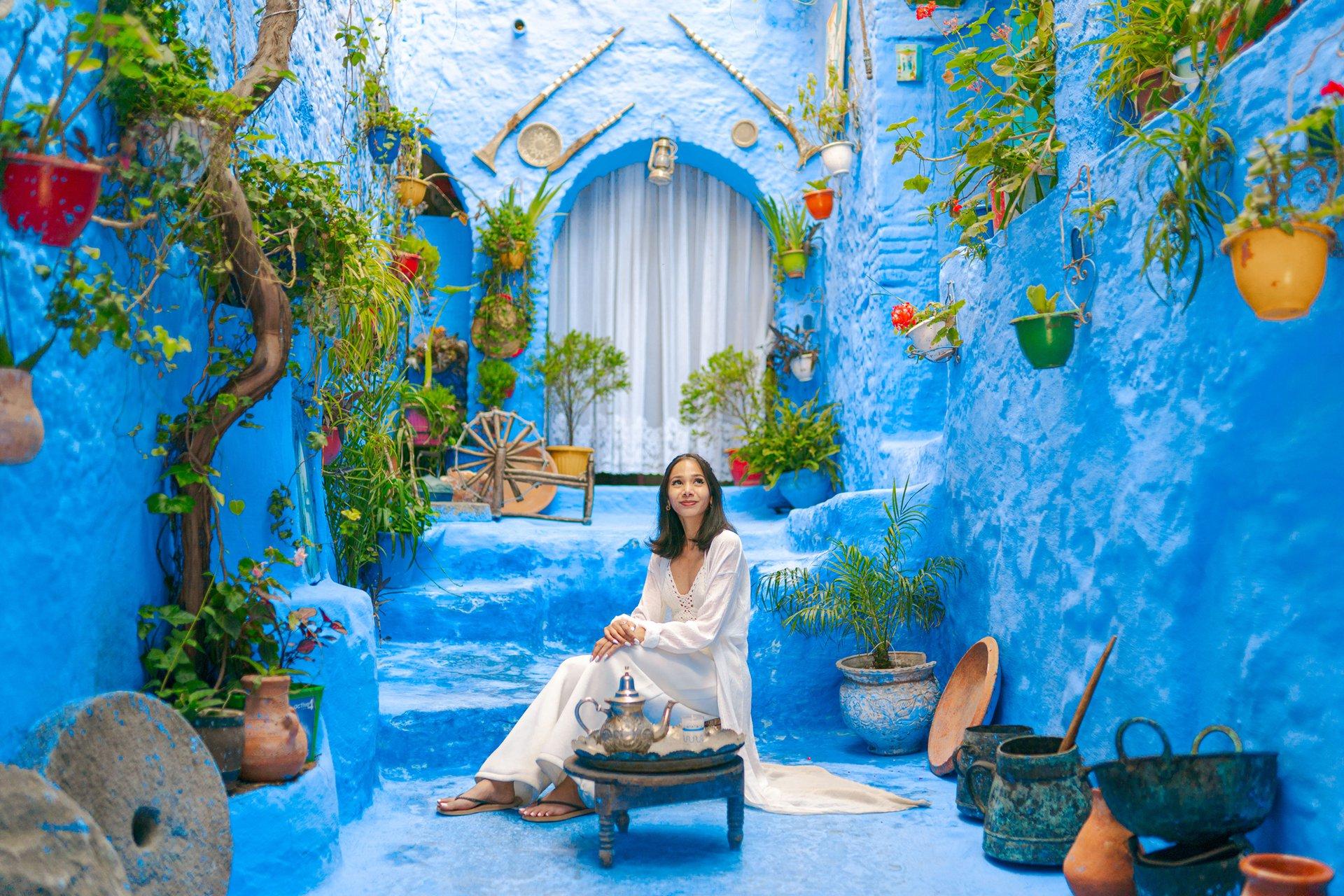
Chefchaouen's famous blue was not always blue. For its first four centuries the medina was washed in lime white and green, the colour of Islam; the indigo now stretching across every alley wall dates largely to the twentieth century, and its origin is still argued over by residents. The town sits at roughly 600 metres in the Rif Mountains, wedged beneath the twin peaks that give it its name — chaouen, from the Berber word for horns. It was founded in 1471 as a fortress settlement, and for centuries remained closed to outsiders. That isolation shaped everything a visitor sees today: a compact medina of fewer than a dozen principal lanes, Andalusian rooflines in terracotta tile rather than flat Moroccan terrace, and a street plan that follows contour rather than grid. A casablanca to chefchaouen tour crosses roughly 550 kilometres of Atlantic plain, cork oak country and mountain switchback to reach it — the distance is precisely why the town survived unchanged for so long. Architecturally, the medina rewards slow looking. The Kasbah, a fifteenth-century walled citadel of ochre stone, anchors Place Outa el Hammam and encloses a garden of orange trees and a small ethnographic museum. The Grande Mosquée beside it carries an octagonal minaret, an unusual form in Morocco and a legacy of the Andalusian refugees who settled here after the fall of Granada. Doorways are studded and low; window grilles are wrought in patterns that repeat from house to house. Water runs everywhere, channelled from the Ras el Maa spring at the eastern edge of town, where the medina simply stops and the mountain begins. What gives the place its present significance is not spectacle but survival. Chefchaouen remains a working town rather than a preserved set. Weavers still operate handlooms in ground-floor workshops. Goat's cheese from the surrounding hills is sold in the same square where wool has been traded for generations. The blue is repainted by hand, annually, by the people who live behind it. The town itself carries no entrance fee — the medina is open access, and the day tour is priced separately. Most casablanca to chefchaouen tour tours are structured around a single day, which is why the arrival window between 09:00 and 14:00 matters: it is when the light falls flattest against the washed walls and before the afternoon heat settles into the narrow lanes.

The blue is repainted by hand, annually, by the people who live behind it.

Dress code

Chefchaouen is a conservative, traditional town in the Rif Mountains, so shoulders and knees covered are appreciated in the medina and mandatory to enter either the Grand Mosque or the Spanish Mosque area respectfully, though non-Muslims cannot enter either mosque's interior. Flat, closed shoes are strongly recommended for the cobbled, stepped lanes of the blue-washed medina.

Bags & security

There are no security checkpoints or bag scanners in the open-access medina, since Chefchaouen town is a public urban area rather than a ticketed site. A small daypack is practical for the steep alleys; larger luggage should stay in the tour vehicle for the day.

Photography

Photographing the blue-washed walls, doorways, and staircases is unrestricted and expected throughout the medina. Photographing local residents requires asking permission first, and interiors of the Grand Mosque and Spanish Mosque cannot be photographed since non-Muslims are not permitted inside either building.

Families & strollers

Children generally enjoy the maze-like blue alleys and the cats that wander the medina steps, and the walk to Ras El Maa waterfall just outside the northeast gate is a manageable, flat outing for families. The full-day drive from Casablanca is roughly 5 hours each way, so strollers are impractical on the medina's stairs; a baby carrier works better than a pram.

Accessibility

The Chefchaouen medina consists of steep, uneven cobbled lanes and stepped staircases that are not wheelchair accessible, and the town has no ramps, elevators, or paved accessible routes. Visitors with mobility limitations should expect to view the blue walls from the lower, flatter streets near Plaza Uta el-Hammam rather than the steepest upper quarters.

Food & drink

Food and drink are limited to what is sold within the medina's cafés and shops; there is no restriction on bringing bottled water into the town itself. Chefchaouen is a conservative town, so alcohol is not widely served or consumed openly in public spaces.

Not allowed

× Drones without local permits × Alcohol in public areas × Non-Muslim entry into mosque interiors × Loud amplified music in the medina × Large suitcases on medina stairs × Open flames or candles × Fireworks × Weapons of any kind × Unauthorized commercial filming equipment × Littering in the medina × Vehicles beyond the medina's pedestrian gates × Feeding wildlife near Ras El Maa

What to bring

✓ Comfortable flat shoes ✓ Sun hat ✓ Sunscreen ✓ Small daypack ✓ Cash in MAD ✓ Light scarf or shawl ✓ Reusable water bottle ✓ Portable phone charger

Opening hours

Mon 00:00 – 23:59

Medina always open, no gate hours

Tue 00:00 – 23:59
Wed 00:00 – 23:59

Souk day, busier midday

Thu 00:00 – 23:59
Fri 00:00 – 23:59

Mosques closed to non-Muslims at prayer

Sat 00:00 – 23:59

Weekend crowds heavier by midday

Sun 00:00 – 23:59

At a glance

Best arrival window

09:00–14:00, best light on the blue-washed medina walls before afternoon heat

Getting there

Car · 5 to 6 hours each way · 350–700 MAD rental plus fuel

Private transfer or organized Casablanca to Chefchaouen tour via the A1/A2 highway toward Rabat, Larache, and Tetouan before reaching the Rif foothills

Public transport · Roughly 2h10min train plus 2–3h bus connection · Train from 250 MAD second class, bus around 60–100 MAD

Al Boraq high-speed train from Casa Voyageurs to Tangier, then a CTM bus onward to Chefchaouen

Taxi · Approximately 5 hours · Typically higher than shared minivan rates

Private grand taxi for the full route, arranged directly or through a Casablanca to Chefchaouen tour operator

Cancellation policy

The town itself has no entrance fee or booking to cancel, since Chefchaouen is open access at 0 MAD; only the Casablanca to Chefchaouen tour transport and guide package is a paid, bookable product. Most operators allow free cancellation up to 24–48 hours before the scheduled departure, with no refund for later changes.

Plan your time

How long do you need?

Recommended time

Full day (13-14 hours round trip)

Most drivers cover the roughly 400 km each way in about 4.5-5 hours, so a casablanca to chefchaouen tour eats close to 9-10 hours before you count a single step in the medina. Leaving Casablanca around 07:00 lands you inside the 09:00-14:00 best-arrival window with cooler air and better light on the blue walls, leaving roughly 4-5 hours on the ground for wandering, lunch, and Uta el Hammam square before the return drive. There is no ticket queue since the town itself has no entrance fee, but lunch stops and photo pauses along the mountain road can add 30-60 minutes, so budget slack rather than a tight schedule.

Crowd levels through the day

Departure from Casablanca Light
Mid-drive through Rif foothills Light
Arrival late morning Moderate
Midday in the main square Heavy
Early afternoon medina wandering Moderate
Departure back to Casablanca Light
Plan ahead

When to go — year at a glance

Weather · crowds · average price — dots go green to amber to red as each metric rises.

Spring (March–May)

Mild Rif Mountain temperatures around 15–22°C make walking the medina's stairs comfortable, and spring wildflowers add color to the surrounding hillsides.

Summer (June–August)

Daytime heat can reach 30°C or higher, so the 09:00–14:00 arrival window matters most now to catch cooler air and the best light on the blue walls before peak afternoon sun.

Autumn (September–November)

Temperatures cool back to the high teens and low 20s°C, and the summer day-trip crowds thin out noticeably by October.

Winter (December–February)

Cool and sometimes rainy with temperatures near 5–15°C, making the mountain drive from Casablanca slower in poor weather but the medina notably quieter.

Insider tips

Helpful tips for your visit

Enter through Bab El-Ain

This gate leads directly into Plaza Uta el-Hammam, the natural starting point for any Casablanca to Chefchaouen tour of the medina.

Wear grippy flat shoes

The blue staircases and cobbled lanes are uneven and can be slick after rain, so proper footwear matters more than in flatter Moroccan medinas.

Carry small MAD bills

Souk vendors and café owners in the medina often cannot break large notes, so small denominations speed up transactions.

Ask before photographing people

A simple gesture and the word for photo is understood, and a refusal should always be respected immediately.

Book the casablanca to chefchaouen tour tour with an early departure

Operators leaving Casablanca between 05:00 and 07:00 maximize actual time in Chefchaouen given the 5 to 6 hour drive each way.

Keep valuables secured on the drive

The long highway journey passes through several cities, so a zipped daypack is more practical than loose items in the vehicle.

Check mosque exterior hours around prayer times

Both the Grand Mosque and Spanish Mosque areas can be busier with worshippers around midday Friday prayers.

Pack layers for the Rif Mountains

Even in summer, mountain air can turn cooler than coastal Casablanca once the sun sets during the return drive.

Where to meet

Meeting points

Casablanca hotel or central pickup point

Casablanca, Morocco

Most Casablanca to Chefchaouen tour operators offer hotel pickup in the early morning

Get directions

Plaza Uta el-Hammam

Medina center, Chefchaouen

Main square where guided walks typically begin, flanked by the Kasbah and Grand Mosque

Get directions

Bab El-Ain gate

Medina entrance, Chefchaouen

Common drop-off and re-entry point into the walled medina

Get directions
The story

The history behind the site

Chefchaouen began as a garrison, not a postcard. In 1471 Moulay Ali Ben Rachid, a Sharif descended from the Idrisid line, raised a kasbah beneath the twin peaks that give the town its name — Chefchaouen, "look at the horns." The purpose was military. Portugal had taken Ceuta in 1415 and pressed inland along the northern coast. Ben Rachid needed a fortified base in the Rif from which to resist those incursions. His fortress walls, thick and red-ochre, still stand at the medina's heart, and any visitor arriving on a casablanca to chefchaouen tour walks past them within minutes of stepping off the coach. The town filled with exiles. Muslims and Jews expelled from Al-Andalus after the fall of Granada in 1492 settled here, bringing Andalusian tilework, whitewashed courtyards, and a tradition of walled seclusion. For roughly four and a half centuries Chefchaouen was closed to Christians on pain of death. The American writer Walter Harris entered in disguise in 1889 and the Frenchman Charles de Foucauld had done the same in 1883; both survived, barely. That isolation ended in 1920, when Spanish troops occupied the town under the protectorate. Spain held it, lost it to Abd el-Krim's Rif Republic in 1924, and retook it in 1926. The blue came later than most assume. The prevailing account credits Jewish refugees arriving in the 1930s, fleeing European persecution, who washed the lime walls with indigo pigment — blue read as a colour of the divine in Kabbalistic tradition. Older residents recall a whitewashed town before that. Independence in 1956 returned Chefchaouen to Morocco, and the highway improvements of the late twentieth century opened the Rif to day travel. Today the daily casablanca to chefchaouen tour brings visitors roughly six hours north to Plaza Uta el-Hammam, the kasbah museum, and the Ras el-Maa spring. There is no entrance fee — the town is open access, with the day tour priced separately. Casablanca to chefchaouen tour tickets cover transport rather than admission, and casablanca to chefchaouen tour tours arriving between 09:00 and 14:00 catch the blue at its clearest. A well-run casablanca to chefchaouen tour tour treats the medina as a living quarter, not a stage set.

1415

Portugal captured Ceuta, opening a period of coastal expansion that alarmed the Rif interior.

1471

Moulay Ali Ben Rachid founded Chefchaouen as a fortified base against Portuguese advance.

1492

Andalusian Muslim and Jewish exiles arrived after the fall of Granada, shaping the medina's architecture.

1889

Walter Harris entered the closed town in disguise, one of the few Europeans to do so and survive.

1920

Spanish protectorate forces occupied Chefchaouen, ending centuries of closure to outsiders.

1924-1926

Abd el-Krim's Rif Republic held the town briefly before Spain retook it.

1930s

Jewish refugees from Europe are widely credited with establishing the indigo wall-washing tradition.

1956

Moroccan independence returned Chefchaouen to national rule, preceding its growth as a travel destination.

Photo spots

Best photo spots

Plaza Uta el-Hammam

Best light · Before 09:00, quieter light

The main square frames the ochre Kasbah walls and the octagonal minaret of the Grand Mosque in one wide shot; stand near the large central tree for the classic angle, or shoot from a café terrace edge for an elevated view. Many travelers on a casablanca to chefchaouen tour start here since it doubles as the medina's orientation point.

Kasbah Walls Viewpoint

Best light · Morning, before crowds peak

Climb the parapet inside the 15th-century Kasbah for a sweeping look over Plaza Uta el-Hammam and the surrounding blue rooftops toward the Rif Mountains. Access is through the museum entrance on the square, and the terrace gets tight once tour groups arrive mid-morning.

Rue Sidi el-Haj Aissa Blue Staircase

Best light · Early, around 07:00–08:00

The deep-blue steps trailing potted plants along this narrow lane are the single most photographed corner of the medina, so composition means shooting straight up or down the stairwell to keep the frame clean. Expect a short wait for the same angle once the sun is high.

Sidi Bouchouka Street

Best light · Morning light, before harsh sun

Wide turquoise stairs framed by mosaic tiles and a colorful courtyard door make this the second essential blue-street shot, with resident cats often adding movement to the frame. It runs off Calle El Asri, so it's easy to reach on foot from the main square.

Spanish Mosque Hillside Viewpoint

Best light · Sunset, or early morning for fewer people

From the hilltop path above Bab el-Ansar, the whole blue medina spreads out below against the Rif Mountains, best composed with the whitewashed mosque arch in the foreground. The paved climb takes about 20 minutes and gets crowded near golden hour.

Gallery

Moments from the experience

Food & drink

Where to eat nearby

Most people on a casablanca to chefchaouen tour eat right on Plaza Uta el-Hammam, where rooftop terraces face the Kasbah and the mint tea keeps coming, but the food on the square itself is fairly generic and pricier than a few streets over. Walk two minutes off the main square and menus turn to Rif goat cheese, bissara, and slow-cooked tagines at local rates, which matters given the limited lunch window on a day trip from Casablanca.

Cafe Clock

€€

Rooftop cafe on the square

Third-floor terrace with wide medina views, known for camel burger and lamb tagine plus fresh mint tea. Gets busy around midday with day-trip groups, so order fast if the coach schedule is tight.

Restaurant Beldi Bab Ssour

€€

Bistro — 5 min walk

Just off Rue El Kharrazin, this terrace restaurant serves beef and oxtail tagine alongside bissara, the local white bean soup finished with olive oil and cumin. A good sit-down option once you step away from the square's tourist-priced menus.

Cafe Restaurant Sofia

Local diner — short walk

Tucked on a quieter street behind the medina's main strip, it does home-style couscous, vegetable tagine and mint lemonade at lower prices than the plaza-front spots. Small kitchen means service slows when a tour bus arrives.

Rooftop cafes on Plaza Uta el-Hammam

€€

Café terraces

Several terraces ring the square itself for a quick mint tea or coffee with Kasbah views, useful for a 20-minute pause between the medina walk and reboarding. Expect tourist pricing and simple, similar menus rather than standout cooking.

Customer Reviews

What travelers say

Real experiences from real travelers

4.5
Based on undefined reviews
1 ★ 890
2 ★ 610
3 ★ 1240
4 ★ 4180
5 ★ 16420
M
Marta L.
Spain · 2026-06-14

Blue lanes at dawn

We left Casablanca before sunrise and the light hitting the indigo walls when we arrived was worth the early alarm. Our guide grew up in the medina and pointed out which shades of blue came from lime wash and which from pigment. The mountain air was noticeably cooler than the coast.

D
Daniel R.
United States · 2026-05-02

Long drive, easy day

The casablanca to chefchaouen tour is a real haul each way, so bring a neck pillow and download something to watch. Once we hit the Rif foothills the scenery took over and nobody minded. Ras el-Maa waterfall at the top of the medina was the highlight for me.

Y
Yuki T.
Japan · 2026-04-19

Good guide, tight schedule

Chefchaouen itself is smaller than I expected and we covered the main lanes and Place Outa el Hammam without rushing. I would have liked longer near the kasbah. The van was clean and the driver handled the mountain switchbacks calmly.

S
Sofia B.
Brazil · 2026-07-08

Cooler than the coast

July in Casablanca was humid but Chefchaouen sat at a comfortable temperature all afternoon thanks to the elevation. We climbed toward the Spanish Mosque viewpoint and watched the whole blue town turn gold. Comfortable shoes matter more than anything else here.

T
Thomas W.
Germany · 2025-11-23

Rif mountain scenery

What surprised me on this Chefchaouen day trip was how much of the drive itself was worth watching, olive terraces and cork oak the whole way through the Rif. Our guide explained the Andalusian refugees who settled the town and why the architecture looks Spanish. Everything ran on time.

A
Amélie D.
France · 2026-03-11

Rain made it better

We had drizzle in the morning and the wet cobbles made the blue walls glow even deeper. Ask about the casablanca to chefchaouen tour tickets in advance because our group filled up quickly. The cats sleeping in every doorway are as advertised.

R
Ravi N.
India · 2026-01-17

Worth the distance

Booking the casablanca to chefchaouen tour meant giving up a full day, and I would still do it again. The medina is quiet by mid afternoon once the coach crowds thin out. Bring small dirham notes for the artisan stalls near the ramparts.

I
Isabel M.
Mexico · 2026-02-26

Wool blankets and mint tea

Our small group wandered off the main stairways into residential lanes where women were weaving on wooden looms. We stopped for mint tea under the octagonal minaret and could hear water running down from the mountain. Among Morocco landmarks this one felt the most lived-in.

P
Peter H.
United Kingdom · 2025-09-30

Smooth logistics

Pickup in Casablanca was punctual and the return got us back before midnight as promised. Compared with other casablanca to chefchaouen tour tours I researched, this one used a smaller vehicle which helped on the narrow mountain approach. The guide spoke excellent English and Spanish.

N
Nadia K.
Netherlands · 2026-06-29

Rif air and indigo walls

Late June meant long daylight so we still had sun at the Spanish Mosque viewpoint after five. The rihlat Chefchaouen felt unhurried despite the driving hours. Photographers should know the deepest blues sit in the shaded alleys, not the open squares.

FAQ

Frequently asked questions

Everything you need to know for your journey

Around the corner

Nearby landmarks worth a detour

Ras El Maa waterfall

10 minute walk from the medina

landmark

A spring-fed stream at the medina's northeast gate where locals wash wool and residents gather to relax.

Kasbah Museum

In Plaza Uta el-Hammam

museum

A 15th-century red-walled fortress built by Moulay Ali Ben Rashid, now housing an ethnographic collection and a rooftop garden view.

Grand Mosque

In Plaza Uta el-Hammam

landmark

Built in 1560 with an octagonal minaret added in the 18th century, viewable only from the exterior by non-Muslims.

Spanish Mosque

20-25 minute uphill walk

viewpoint

An unfinished 1920s colonial-era mosque on a hilltop offering the town's signature panoramic view over the blue rooftops.

Plaza Uta el-Hammam

Medina center

square

The main square shaded by orange trees, lined with cafés and flanked by the Kasbah and Grand Mosque.

Where to stay

Where to stay nearby

Medina riads

Within the walled medina

boutique

Traditional courtyard guesthouses converted into small hotels, many just steps from Plaza Uta el-Hammam.

Upper Medina district

5-10 minute walk from the square

mid-range

The most photographed quarter with blue walls and stepped alleys, home to several guesthouses with rooftop terraces.

Ain Tissimane quarter

Below the Spanish Mosque path

budget

A quieter residential area with simpler guesthouses away from the main tourist flow.

Ready for Adventure?

Join thousands of happy travelers who have discovered this incredible experience

Book Your Experience Now